 FREE SHIPPING! Automatically Applied on Orders Over $74!



You’ve done the tough stuff. You’ve dropped the weight and you’ve found a number that works for you and you’re continuing your medication to maintain it.
So now what?
For a lot of people, this is the quietest and most confusing part of the journey. The dramatic progress is behind you. The scale isn't the story anymore. And it's easy to assume that "maintenance" means you can stop paying attention, that the work is done.
It isn't. Life after Ozempic just looks different.
Let me explain what I mean by that. Just like any house, if you don’t maintain it, the value will fall apart eventually. You can spend months renovating a house but unless you keep up with maintenance, you won’t get the full benefit of it all. That’s what Phase 4 is about. Now that your house is built, we just need to maintain it. Instead of transforming your body, Phase 4 is about maintaining the results.
It doesn't change what your body needs. It changes how much you eat.
A Quick Refresher: The Five-Phase Framework
Think of our GLP-1 approach like renovating a house: there are distinct steps and each has its focus. But what never changes? The foundation: protein, the Core 4, movement and sleep. Each phase builds upon the one before it and adds the most pressing ingredient your body needs at that time.
It still has the same core; it’s the support that shifts as you do.
This article covers Phase 4: Maintaining Results, protect what you've built. Not sure where you are?
Why Maintenance Is an Active Phase

Weight maintenance after GLP-1 changes the question your body is asking, even while you stay on your medication. It's no longer "how do I lose?" It's "how do I hold, and stay healthy while I do?"
And that's still an active job, because you're eating less than you did before treatment, which means the same nutritional gaps that opened during weight loss are still open now. They just get less attention once the scale stops moving.
Four things move to the front of the line in the Ozempic maintenance phase.
Muscle. You worked hard to preserve it during active loss. Muscle isn't "set and forget." Without ongoing protein and resistance training, it slowly slips away, and with it goes the metabolism that makes maintenance easier. Holding your muscle is what keeps your results from becoming harder to keep.
Bone. Weight loss is associated with changes in bone remodeling, and that process continues into maintenance. This is a long-game concern that produces no symptoms until it matters, which is exactly why steady support (vitamin D, K2, and adequate protein) belongs in the maintenance plan, not just the early one.
Regarding gallbladder health, I think this is something to pay attention to and discuss with your prescriber, particularly if you’re going to be on this long-term. And nutritional support for healthy bile flow might become a Phase 4 consideration.
Heart. Brain. Having dealt with the urgent need for weight loss, I can finally think about the longer game: heart and brain health, those things that will determine whether I feel good not only today, but 10 years from now. That’s when maintenance isn’t just about the scale anymore. It’s about how I’m aging.
The common thread: they all do not call attention to themselves. They are the slow-burn priorities and that’s precisely why maintenance is active, not reactive. We don’t want intensity. We want routine.
Part One: Your Foundation
Core 4: no change in this stage, nor any other stage. Multivitamin (good quality), vitamin D3 with K2, synbiotic and magnesium. In maintenance, the foundation matters just like before since you're still eating less than you were prior to treatment, and even though the scale has settled down, the gaps it fills are still open.
Base remains the same. Support adjusts to your body.
Part Two: Phase 4 Additions

Phase 4 has two additions for the long run: keeping muscle mass, and protecting the heart and brain over time. Both of these are optional.
For muscle preservation: Creatine Monohydrate. Creatine doesn't stop being useful once the weight is off. In maintenance, its job shifts from protecting muscle during loss to holding it over the long term, supporting strength, recovery, and the lean tissue that keeps your metabolism steady. Its benefit comes from consistent daily use, which makes it a natural fit for an Ozempic maintenance routine.
How to take: 5g (1 scoop) daily in water or a protein shake. Consistency matters more than timing.
For heart and brain support: Therapeutic-dose Omega-3. Omega-3 becomes a long-game supplement in Phase 4. Therapeutic-dose EPA and DHA support cardiovascular and cognitive health, the priorities that move to the front once weight loss is no longer the focus, which is one reason it earns a place in the maintenance plan. Look for marine-source EPA and DHA.
How to take: 2 softgels daily with your largest meal. If you take blood-thinning medication, discuss omega-3 at this dose with your healthcare provider.
Gallbladder: Long-term or sudden weight loss can affect your bile over time, so if there’s a family history of gallbladder problems, or if you’ve been in treatment for a while, let’s talk about individual risk. Ask us during your next visit.
The right combination for you depends on your history, medications and goals, precisely what the free assessment will help you sort out.
Food and Daily Habits: Consistency Over Intensity
How to maintain goal weight on Wegovy?

How to maintain weight loss after Ozempic comes down to one word: maintenance rewards steadiness. Maintaining weight after Ozempic means the habits that got you here are the habits that keep you here. The goal now is to make them durable, not to escalate them.
Keep your protein where it's been. 25-30g per meal, still. Protein is what protects the muscle that keeps maintenance from getting harder over time, and because you're still eating less than before treatment, it still takes intention to hit.
Keep resistance training in the routine. This is the single most effective thing you can do to hold your muscle and bone for the long term. Two or three sessions a week, sustained, is the most effective thing you can do to hold your muscle and bone for the long term.
Protect your sleep and manage your stress. Both are critical for appetite regulation and recovery, which helps maintain stability. Aim for 7 to 9 hours, consistently.
Don't forget about hydration and fiber. This is still a priority from previous phases. Smaller food amounts will result in less fluid, fewer electrolytes, and less fiber than you've been accustomed to, so stay intentional.
Keep in touch with your doctor. During maintenance, regular follow-ups make sense: blood work to assess your levels, discussion of how you are doing on long-term treatment, and adjustment of the plan if your dose needs to be modified or you want to change your goal. Long-term treatment should involve long-term care.
What Comes Next: Phase 5
At some point you may decide, with your prescriber, to reduce your dose or come off the medication. That transition is its own phase, and the one people are least prepared for. As the medication tapers, appetite rebounds and old habits test their strength. The results you protected through maintenance are most vulnerable here, and the preparation starts weeks before your first dose reduction, not after.
Find Out What Your Body Needs Today
Maintenance has its own set of priorities. Your specific plan should reflect where you are in your treatment journey based on your goals, timeline, and medical history. Our free GLP-1 Nutrition Assessment takes about two minutes to figure out your phase, and then gives you a personalized report for exactly where you are.
We can also offer personal coaching sessions with our clinical nutritionists. In these appointments, we look over your health and lab history, and design a strategy that works for your lifestyle, not just your stage of life.
Frequently Asked Questions
I've reached my goal weight on a GLP-1. Do I still need to focus on nutrition?
Yes. Since you’re still eating less than you were pre-treatment, the nutritional voids that developed with the weight loss remain open in maintenance. Only the emphasis is shifting now, from weight loss to maintenance. Your goal now is to maintain your muscle and bones, as well as protect your heart and brain to ensure your results last longer.
What vitamins and supplements should I take long-term on a GLP-1?
Core 4 stays the same: multivitamin, D3+K2, synbiotic, and magnesium. For maintenance, creatine (muscle) and therapeutic-dose omega-3 (heart and brain) are two of the few supplements that are worth targeting. As usual, any further choices depend on your individual history and whether food is already sufficient.
Does long-term GLP-1 use affect the gallbladder?
Long-term or fast weight loss can lead to changes in the makeup of your bile and the functioning of your gallbladder, so you should speak with your prescriber if you’re on the medication for a long period of time, and be familiar with potential warning signs such as upper-right abdominal pain (especially after a meal high in fat).
Will I lose muscle if I stay on a GLP-1 long-term?
It doesn’t have to be, but muscles aren’t built automatically. Without ongoing protein and resistance training, your muscles will shrink over time. Whether you’re on meds or not, this applies. To maintain muscle, continue doing what kept your muscle mass healthy throughout your weight loss: eat enough protein, do resistance training twice or three times a week, and use creatine as an extra layer of protection.
Are the GLP-1 foundation supplements safe to take long-term?
Most healthy adults will find these daily staples (GLP-1 plan, multivitamin, vitamin D3/K2, magnesium, synbiotic, and in maintenance creatine and omega-3) to be safe, well-studied, and well-tolerated. One exception: If you're on a blood thinner, check with your doctor first before using therapeutic doses of omega-3. Other than that, it really depends on your health history and any other medications you take, which is precisely why we recommend getting a consultation.
Do over-the-counter "GLP-1 supplements" work?
It depends what you mean by "work." No over-the-counter supplement replicates a prescription GLP-1 medication, and none should be sold as an equivalent. The foundation supplements in this plan do something different: they fill the nutritional gaps that open when you're eating less, and protect the muscle, bone, heart, and brain that maintenance depends on. That's a real job, and it's the one they're studied for.
What is GLP-1 nutrition support?
GLP-1 nutrition support is the diet, supplement and lifestyle plan that compensates for what gets lost when the drug decreases your hunger. As GLP-1 reduces your food intake, it simultaneously reduces your protein, vitamin and fiber intake.
We want to focus more on lean muscle preservation, bone health, heart and brain health, than on just losing weight. When we get to maintenance we should be aiming for 25 to 30 grams of protein per meal, continuing our Core 4, and taking creatine and therapeutic dose omega-3s if necessary. This is designed to carry you through the full journey, not just during weight loss.
What happens when you reach your goal weight on Wegovy?
Once you hit your goal weight on Wegovy, most people stay on a maintenance dose to hold it there. The question your body is asking shifts from "how do I lose?" to "how do I hold, and stay healthy while I do?" You're still eating less than before treatment, so the nutritional gaps that opened during weight loss are still open. The work now is protecting your muscle, bone, heart, and brain, not chasing the scale.
How does a Wegovy maintenance dose work?
The Wegovy maintenance dose is the dose you stay on after reaching your goal weight with your doctor, which keeps your appetite suppressed, keeping the weight off. Deciding on the exact dose is a clinical call for you and your provider to make together. Your nutritional strategy also doesn't change: you need to plug the nutritional holes created by the diet and keep the muscles, bones, heart and brain healthy, because that's what your body needs to maintain your weight. Because this will be ongoing, you should monitor your status periodically with bloodwork.
What is the Ozempic maintenance phase?
When you’re at your target weight, you continue taking Ozempic to keep the weight off. This period is referred to as the Ozempic maintenance phase. This is an important and active part of the process, not a time to take it easy. You are still consuming fewer calories than prior to treatment. So, the same nutritional concerns exist. Now, these four priorities come to the forefront: Muscle, bones, gall bladder, and heart/brain health. You want to be consistent, not intense. You need to keep up the good work for the long game.
If you’re new to the framework, or want the basics on how nutrition plays a role in each stage, our guide here will help you out:
The Bottom Line
Hitting your goal weight is a big deal, but it’s a milestone. Not an endpoint. Maintenance has its own priorities. They’re quieter, longer-term ones are muscle, bones, heart, brain, factors that affect how you look and how you feel.
The work is done. Now you keep up the house steadily, regularly, and on the same foundation that brought you here.
Protect what you’ve got. Do what it took to get there.
It changes the amount that you eat. It doesn’t change what your body still requires.
These statements have not been evaluated by the Food and Drug Administration. These products are not intended to diagnose, treat, cure, or prevent any disease. This information is educational and is not a substitute for advice from your healthcare provider.
venta
PATHWAY
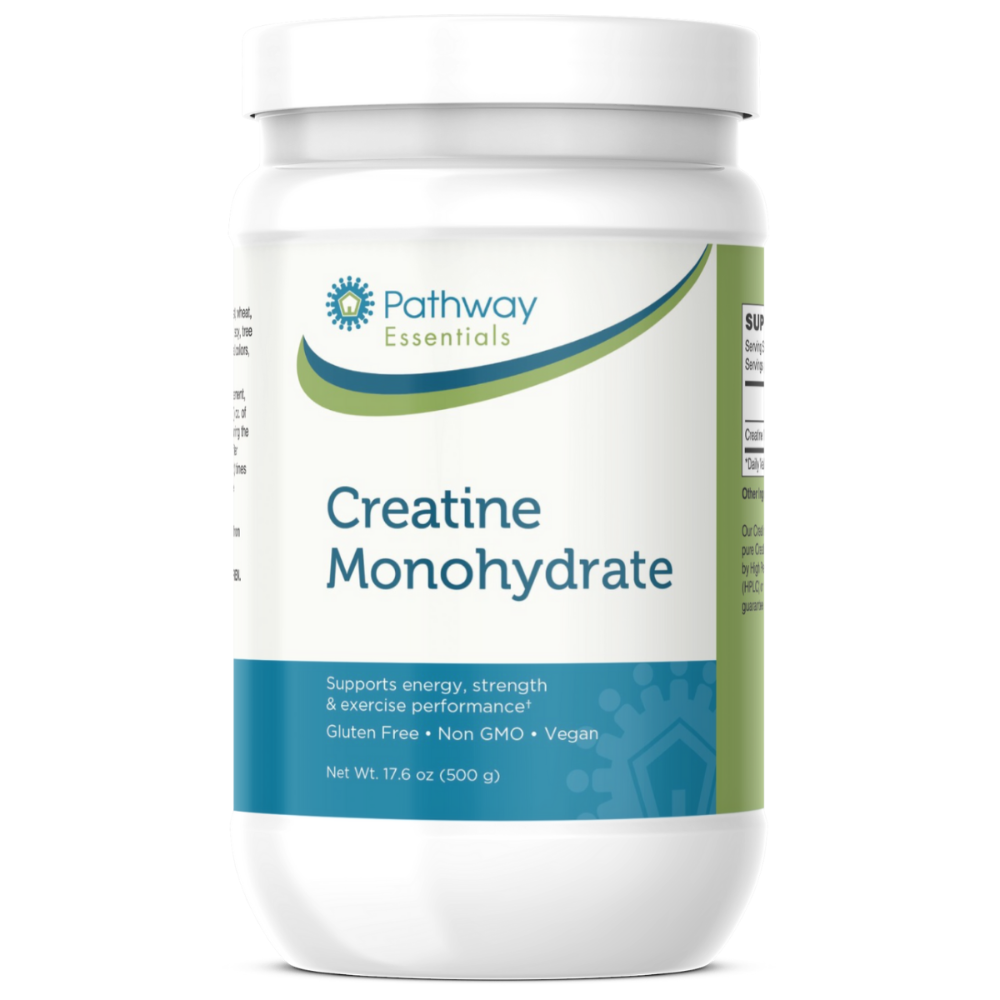
Monohidrato de creatina
No reviews
$39.31
$56.16
El cuerpo puede producir pequeñas cantidades de creatina, principalmente en el hígado y los riñones. Esta creatina es transportada a través de la sangre al músculo esquelético, que la requiere para un rendimiento óptimo. Desafortunadamente, la cantidad de creatina que se ha demostrado en estudios de investigación clínica que ayuda a apoyar y mejorar el rendimiento del ejercicio, la síntesis de proteínas musculares y funciones relacionadas es mucho mayor de lo que el cuerpo puede producir y de lo que consumimos en nuestra dieta. Aquí es donde entra en juego la creatina suplementaria como monohidrato de creatina. Varios gramos de monohidrato de creatina suplementario pueden proporcionar un apoyo significativo a los músculos que trabajan y se ha demostrado que aumentan el rendimiento, la fuerza y la masa muscular. La mayoría de las investigaciones sobre la creatina han utilizado monohidrato de creatina de alta calidad y grado farmacéutico. Nuestro monohidrato de creatina es fabricado por un líder mundial reconocido en la investigación, el desarrollo y la fabricación de creatina. Ofrecemos esta marca de creatina, ya que es la más utilizada en estudios de investigación y ha demostrado ser eficaz en atletas y también en aquellas personas que solo buscan esa "ventaja" que les ayude a alcanzar sus metas de estado físico y atléticas.
Características:
El monohidrato de creatina de grado farmacéutico más puro, fabricado según los estándares más estrictos de la industria.
Probado consistentemente y demostrado que está libre de creatinina, diciandiamida y dihidrotriazina, impurezas que se encuentran típicamente en productos de creatina de mala calidad.Fabricado mediante un proceso patentado que proporciona el producto terminado de la más alta calidad; uno que se ha utilizado en más estudios de investigación que cualquier otra creatina en el mundo.
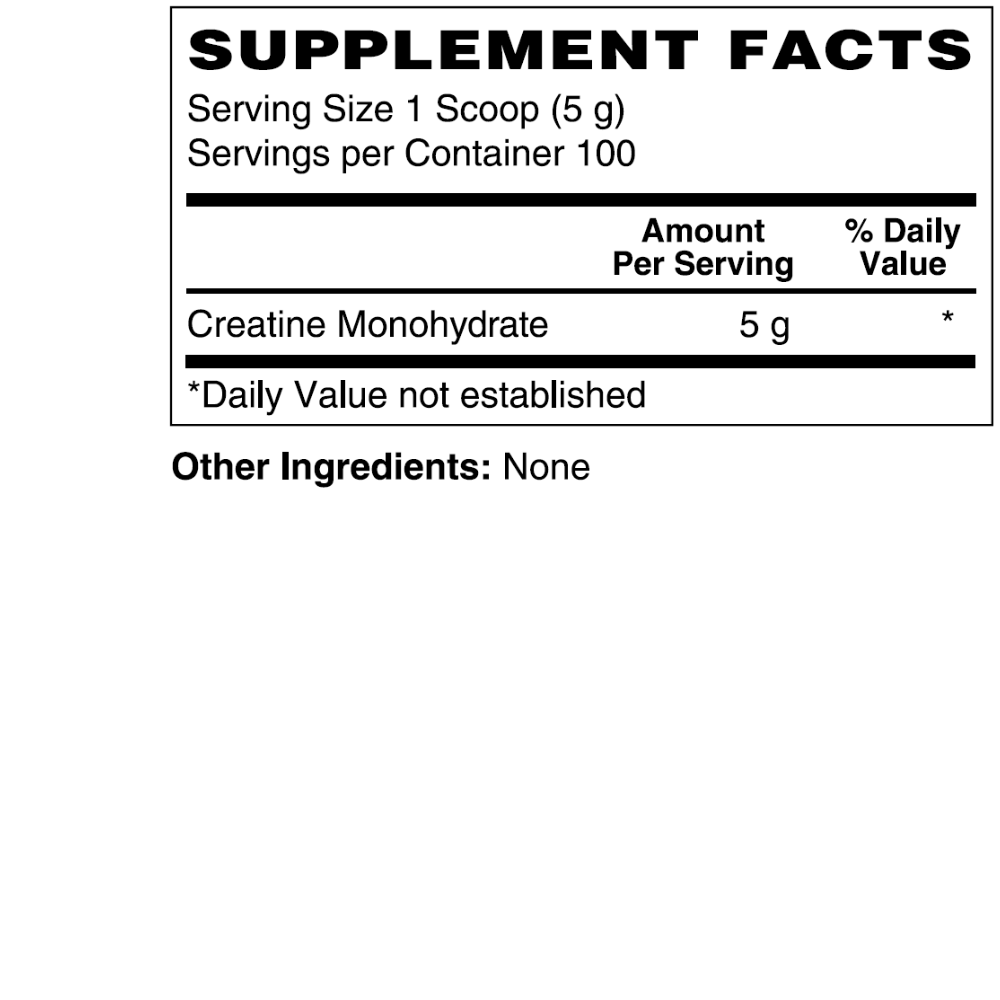
Proporciona 5 gramos de monohidrato de creatina pura por porción (cucharadita).
Beneficios:
El monohidrato de creatina sirve como fuente de grupos fosfato. Esto permite que la principal fuente de energía del cuerpo (ATP) se mantenga en niveles óptimos.
Los niveles óptimos de ATP, particularmente en el tejido muscular, ayudan a mantener y mejorar el rendimiento y la "resistencia" muscular.
La investigación científica ha verificado que la creatina aumenta la fuerza muscular, la masa corporal magra y la energía muscular, al tiempo que acelera la recuperación de energía durante el ejercicio intenso.
Los estudios demuestran que el monohidrato de creatina puede ayudar a reducir la fatiga muscular al reducir la acumulación de ácido láctico en el tejido muscular después de actividades, ejercicios, etc., que requieren ráfagas cortas de energía máxima.
Ayuda a mantener un entrenamiento más intenso, lo que mejora aún más la fuerza y el crecimiento muscular al retrasar la fatiga muscular. (La creatina regenera la energía del ATP para aumentar el tiempo de trabajo muscular en la actividad anaeróbica).
Uso sugerido:
Como suplemento dietético, los adultos toman una (1) cucharada en ocho (8) oz. de agua o jugo, cuatro (4) veces al día durante los primeros cinco (5) días (fase de carga).
Después de la fase de carga, tomar una (1) o dos (2) veces al día, o según las indicaciones de un profesional de la salud.
Instrucciones de almacenamiento:
Almacenar en un lugar fresco y seco
Mantener alejado de la luz directa
MANTENER FUERA DEL ALCANCE DE LOS NIÑOS.
venta
PATHWAY
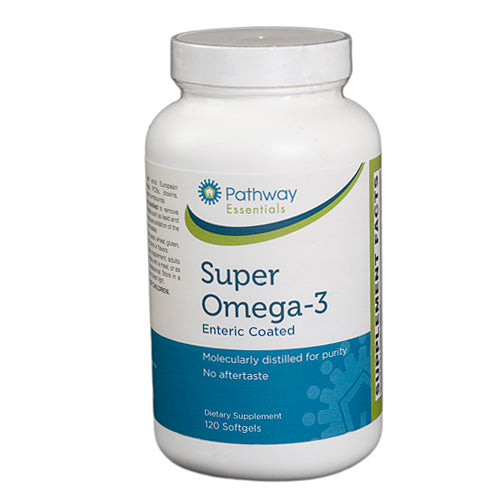
Súper Omega-3 EC
1 review
$36.04
$51.48
La cubierta entérica reduce los eructos con sabor a pescado
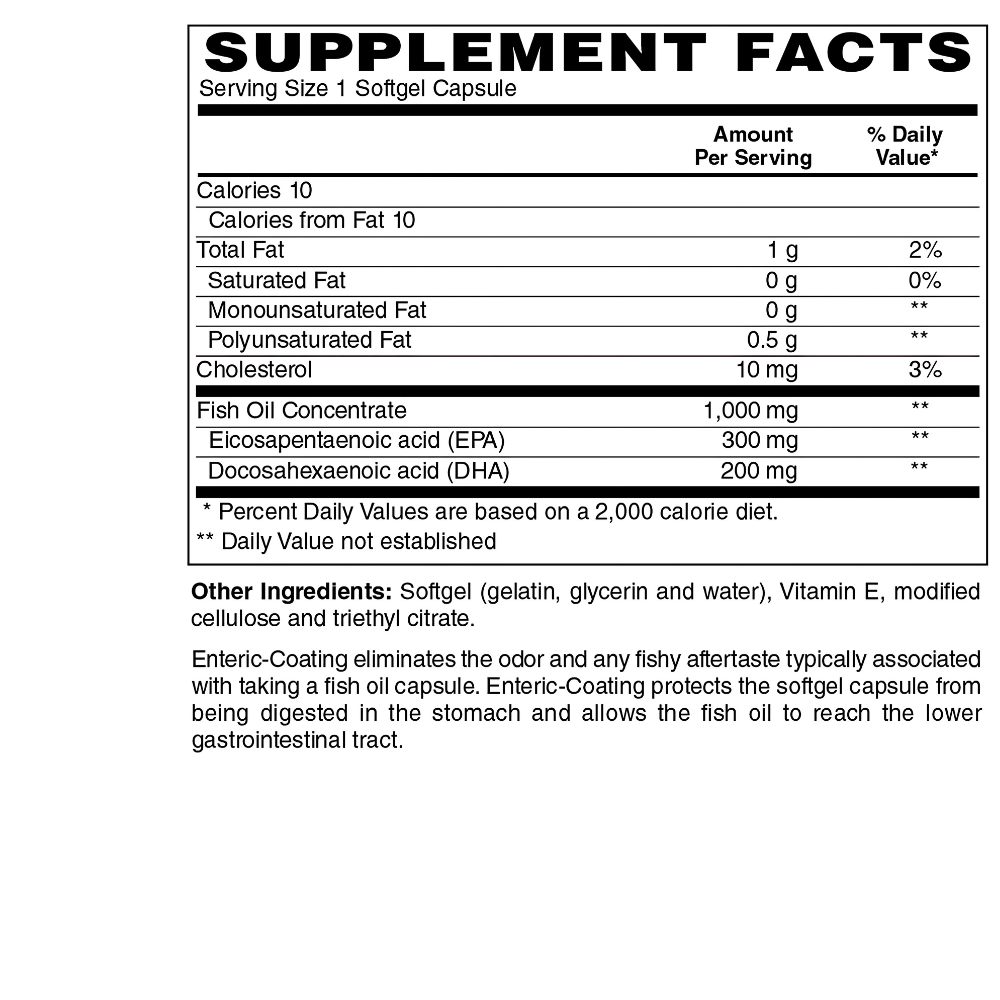
Super Omega-3 es destilado molecularmente para su pureza y contiene altas concentraciones de los ácidos grasos esenciales Omega-3 EPA y DHA (300 mg y 200 mg respectivamente). Los ácidos grasos Omega-3 son un nutriente de apoyo muy importante para la salud cardiovascular, así como para la salud cerebral y ocular. Cada cápsula blanda tiene una cubierta entérica para eliminar el olor y el regusto a pescado típicamente asociados con la ingesta de una cápsula de aceite de pescado. La cubierta entérica también protege las cápsulas blandas de ser digeridas en el estómago y permite que el aceite de pescado llegue al tracto gastrointestinal inferior para su absorción.
Uso sugerido: 1 cápsula blanda 2 veces al día
References
- PubMed
- PubMed
- PubMed
- NIH Office of Dietary Supplements
- NIH Office of Dietary Supplements
- NIH Office of Dietary Supplements
- NIH Office of Dietary Supplements
- PubMed
- PubMed
- NIH Office of Dietary Supplements
- Weight loss induced bone loss: mechanism of action and clinical implications (2025)
- Optimizing Weight Loss in the GLP-1 Era: Preserving Muscle Mass, Function and Metabolic Health Through Precision Nutrition and Resistance Training (2026)
Categories
Categories
Humanized Health - NEW!
Learn about personalized health from top experts! Check out our fascinating new shows every week, available as videos, podcasts and transcripts.:
Our Bloggers
-
 Paula Gallagher
Paula is a highly qualified and experienced nutrition counselor on the staff at Village Green.
read more.. -
 Margo Gladding
Margo's impressive knowledge base is the result of a unique blend of educational and professional experience.
read more.. -
 Dr. Neal Barnard
Dr. Barnard leads programs advocating for preventive medicine, good nutrition, and higher ethical standards in research.
read more.. -
 Dr. Joseph Pizzorno
Dr. Joseph Pizzorno, ND is a pioneer of integrative medicine and a leading authority on science-based natural medicine.
read more.. -
 Debi Silber
Debi is a registered dietitian with a master’s degree in nutrition, a personal trainer, and whole health coach.
read more..
SEE ALL OF OUR BLOGGERS
Invalid password
Enter


Learning Resources
Consultas
Farmacia/Preparación de medicamentos
Salud Humanizada
Blog de Village Green
General Information
Contáctenos
Sobre nosotros
Política de privacidad
Oportunidades de Empleo
Programa de afiliados
Stay Connected
Village Green Apothecary
5415 W Cedar Ln
Bethesda, Maryland, 20814
(301) 530-0800
Toll Free: (800) 869-9159
The information provided on this site is not intended to be a substitute for advice or treatment from a qualified physician, nor is it intended to diagnose or treat a health problem or disease. Consult your physician prior to starting any new health program or if you any questions regarding a medical condition.
© 2025 Village Green Apothecary - All Rights Reserved.
