 FREE SHIPPING! Automatically Applied on Orders Over $74!



The number on the scale is coming down. Your clothes are fitting better. Almost everything you check is confirming that the drug is working as intended.
But what almost nobody ever asks is: What do you stand to lose?
Most people assume every pound is fat. It isn't. When you lose weight, your body doesn't just burn fat and leave everything else intact, it can also break down lean muscle, and if your nutrition isn't keeping up, it often does. That Ozempic muscle loss is quiet. You won't feel it happening. You may not notice until weeks later, when your energy dips, your strength changes, or there's an extra tuft of hair in your comb.
This medication helps you eat less. This medication does not determine what your body sheds. That’s based on your diet, activity and whether your body still gets everything it needs when you’re eating less.
This is the point of Phase 2, active weight loss, when progress is rapid and your nutritional requirements are highest at precisely the point when eating is most difficult.
This drug does not make you eat less; it alters what you eat. It does not change what your body still needs.
A Quick Refresher: The Five-Phase Framework
Think of the GLP-1 journey as a house remodel where we make adjustments along the way, each step with its own specific focus. Your home base will remain the same throughout every step: Protein, The Core 4, Movement, and Sleep. What will change from phase to phase is what specific support your body requires.
The base doesn’t change. The support changes with your body.
This article covers Phase 2: Actively Losing. The focus now is protecting the structure.
Just starting out? Begin with Phase 1 ►
Not sure where you are? Take the Free GLP-1 Nutrition Assessment ►
What's Happening Inside Your Body Right Now

Phase 2 is the demolition stage of the renovation. But no matter how experienced the contractor, there's one wall they never remove: the load-bearing one. Take it out and the building gets smaller, but also weaker.
The same principle applies to your body. Your fat mass is the square footage you’re looking to reduce. The lean muscle, bones, and metabolic capacity are the load-bearing walls of your home. The purpose is not to have a smaller home, but rather a more durable one, and the way you do that is by consuming foods that signal to your body which walls it should retain.
There's no such thing as automatic fat loss. Your body isn't aware of your desire to get rid of some extra fat. All it knows is that fewer calories are going in than before and there must be a source to draw from. It will take from fat, which is good. But it can also take from muscle. That choice is made based on your protein intake, your resistance training, and whether your nutrient needs are being satisfied. Two people can both be on the same weight-loss drug and lose the same amount of weight, say 30 pounds, and still look completely different. Because of what those pounds consisted of. The scale measures how much you've lost. Body composition analysis measures what.
And here's the tension of Phase 2: your protein need peaks right as your appetite bottoms out. Protein is what tells your body to keep lean tissue rather than burn it, and you need more of it exactly when a few bites fill you up and skipping meals feels effortless. That's not weak willpower, it's the medication working. But it leaves a lot of people short on protein at the worst possible time, without knowing it.
Some changes lag. More hair in the brush, slower recovery, skin changes, none of it shows up overnight, so what you do nutritionally matters now. Learning how to prevent glp 1 muscle loss beats correcting glp 1 muscle loss later.
This doesn't mean the medication is making you sick. And it doesn't mean that GLP-1 muscle loss is a sign that the medication is not helping you. In fact, mostly it means it's doing its job. But what you really need to be wondering is, "Is my diet keeping up with what this drug is demanding from my body?"
Part One: Your Foundation
How to prevent GLP-1 muscle loss?
Core 4 is unchanged in this phase, and always will be: A good multi, Vitamin D3 + K2, a synbiotic, and Magnesium. If you have started building your Core in Phase 1, continue on. If not, this is where you should begin.
The base remains constant. The fit adjusts to your body.
Part Two: Phase 2 Additions

With the foundation in place, Phase 2 adds two targeted additions for its two biggest risks: losing lean muscle, and changes to the structural tissue in hair, skin, and joints. These two GLP-1 muscle loss supplements come in only when you need them.
For muscle preservation: creatine monohydrate. If you want to come out of your weight loss stronger, not just smaller, creatine is one of the best-studied tools there is. It helps your body hold onto lean muscle while you're eating less, and supports the strength and quicker recovery that make everyday movement feel easier. It works on its own, and even better if you're doing any kind of strength work. For anyone whose appetite is low and whose protein some days falls short, it's a simple daily insurance policy for your muscle. The effect builds over time, so the sooner you start, the more it protects.
How to take: 5 grams (1 scoop) daily in water or a protein shake. Timing doesn't matter, consistency does.
For hair, skin, and joints: collagen peptides. The protein you eat is great for your muscles, but it's light on the specific building blocks your hair, skin, nails, and joints depend on, glycine, proline, and hydroxyproline. Collagen delivers those directly. So collagen isn't about fixing what you see today, it's about protecting what you'd otherwise see months from now. Start before the changes show up, not after.
How to take: 10 to 15 grams daily in coffee, a smoothie, or a protein shake.
The best option for you will depend on your symptoms, medications, and goals, and that’s precisely what our free assessment will help you determine.
Food and Daily Habits: Where the Biggest Results Come From
How much muscle do you lose on Ozempic?
Supplements make up for the deficiencies. Your everyday behaviors are the workmen building the project, and their quality is what determines what’s built.
Don't compromise on protein. If you take one thing from this article, it's this. Protein is the single biggest factor in whether you keep your muscle while losing fat, it's the signal that tells your body to hold onto lean tissue rather than burn it for fuel. Aim for 25 to 30 grams at each meal, three to four times a day (for most people, 75 to 120 grams total). Since you won't be relying on hunger to tell you when to eat, plan ahead and make protein the star of every plate. If a full meal isn't doable, a shake or high-protein snack beats skipping. Greek yogurt, cottage cheese, eggs, fish, poultry, tofu, edamame, and legumes are all strong choices, with a protein powder to round out the day. And don't skip protein at breakfast, it's hard to make up later.
Add resistance training. Protein tells your body to keep the muscle. Resistance training tells it to use that muscle, which is what actually holds onto it. Resistance training protects muscle during weight loss in ways that cardio or further restriction alone cannot match. You don't need a gym: two or three sessions a week that load your muscles (bodyweight squats, push-ups, lunges, rows, hinges) make a real difference. Start light and add resistance as you get stronger.
Make recovery as intentional as the workout. Muscle rebuilds during rest, not during exercise. Aim for seven to nine hours of quality sleep, chronic short sleep raises cortisol and hunger hormones and blunts your recovery. Your foundational magnesium glycinate, taken 30 to 60 minutes before bed, supports falling asleep and staying asleep. And give your muscles at least 48 hours after resistance work to repair.
Don’t lose sight of fluids, electrolytes and fiber. Now more than ever, don’t let yourself get dehydrated, hydrate before you have a headache or cramps. Make sure you’re regularly consuming electrolyte drinks, broth and high-mineral foods. Continue fiber (25-35g/day) from vegetables, legumes, whole grains and seeds to help maintain healthy digestion and blood sugar as your intake decreases.
Don’t wait until you notice your hair falling out. Or lose muscle. Or feel fatigued all the time. Or take months to recover from a workout. These are lagging indicators of the deficiencies that already exist in your body. Those deficiencies have been accumulating for weeks before you even realized they were there. It’s easier to maintain health with protein, supplementation and exercise than it is to fix things down the line. Act now.

What Comes Next: Phase 3
The weight loss phase doesn’t last forever. Eventually, the rate of loss will slow down or stop altogether and whatever strategy you used to get you here in Phase 2 will no longer be effective, sometimes incrementally, sometimes suddenly. Most people interpret a plateau as a sign of failure or as a signal that they should be stricter. Usually, it’s neither. A plateau signals that your body is responding and adapting: Cortisol has risen after months of caloric restriction, leptin sensitivity has decreased as body fat decreases, and resting metabolic rate has decreased accordingly. This is all normal and doesn’t require more restriction, rather it requires support for what’s causing the stall.
Find Out What Your Body Needs Today
Preserving your muscles while dropping fat isn’t something that happens by chance, you need the right food, supplementation, exercise, and lifestyle strategies, applied consistently during the most important time period of your GLP-1 experience. And you don’t have to learn them all on your own. Our free GLP-1 Nutrition Assessment figures out your phase in about two minutes, and builds a personalized report for exactly where you are.
If you need more personalized advice, we can offer that as well. During an individual session, our clinical nutrition team will look at your health and lab history and create a plan specifically for you.
Frequently Asked Questions
Will a GLP-1 cause muscle loss?
This isn’t specific to GLP-1s, though. Some amount of muscle loss happens whenever you lose weight rapidly, because rapid weight loss occurs from a large, sustained calorie deficit, and if you don’t do anything to preserve your lean mass, you’ll lose it. It’s just that these medications create that large deficit, which makes protein, resistance training, and supplementing more important now than in any other scenario.
Which GLP-1 preserves the most muscle?
The amount of muscle lost is correlated to the rate and extent of weight loss, not with the choice of medication. The variables that contribute most to whether muscle is preserved (protein, creatine, and resistance exercise) are ones that are in your control and are more important than which drug you take.
How do I avoid muscle loss on a GLP-1?
Here’s the big three: 25 to 30 grams of protein three to four times per day, resistance training two to three times per week, and five grams of creatine monohydrate per day as extra insurance. Because the meds make you less hungry, making sure you eat that much protein can take some intention, but these together will change the ratio of your loss towards fat loss versus muscle loss.
Why is my hair shedding, and will it stop?
It’s normal to shed in this stage due to the added strain of drastic weight loss and nutrient deficiencies. Hair follicles have a lag time before they respond to these changes, so shedding will likely taper off as protein and overall nutrition levels normalize. Collagen peptides along with sufficient protein provide the necessary components for hair and skin health.
What supplements should I be careful about with my medication?
Take care of timing. Fiber, iron, and calcium may either decrease absorption or increase fullness and slowed digestion which is already caused by a GLP-1. Take these supplements at different times than your meals and from each other. Let us know everything you are taking and our providers/pharmacists will let you know if there are any interactions.
Can Ozempic muscle loss be reversed?
Yes, for most people. Muscle that you lose through fast weight loss can be built back up with strength training and adequate protein, just like it’s been for years whether you’re using Ozempic, Wegovy, Mounjaro, or Zepbound. It doesn’t return without effort though, which means you have to commit to lifting weights 2-3x per week and consuming 25-30g of protein with every meal. Creatine may help support that rebuilding, and the sooner you start protecting muscle, the less you'll have to rebuild later.
The Bottom Line
GLP-1 medications can produce some of the most significant weight loss you've ever seen, but the number on the scale is only part of the story.
Your muscles still require protein. Your bones still require nutrients to be able to remodel during a period of rapid loss. Your hair and connective tissue still require those amino acids that aren’t provided by just eating protein. Your body is performing all of the same functions as it always has; you’re just giving it less of the ingredients needed for those tasks.
In Phase 2, it's not only how much weight you lose. It's what that weight is made of, how strong and capable you are when the phase ends, and how well you've set up everything after.
Burn fat. Keep the load-bearing walls. Form long-term habits.
This medication alters the quantity of food that you eat. This medication does not alter the quantity of food that your body still needs.
These statements have not been evaluated by the Food and Drug Administration. These products are not intended to diagnose, treat, cure, or prevent any disease. This information is educational and is not a substitute for advice from your healthcare provider
Don’t know a lot about GLP-1 drugs and just need to learn the basics, like what does GLP-1 even stand for, or how they work? What’s the difference between GLP-1, GIP, and DPP-4? Check out our main guide that explains it all:
NIH Office of Dietary Supplements, Vitamin D: Fact Sheet for Health Professionals.
NIH Office of Dietary Supplements, Vitamin B12: Fact Sheet for Health Professionals.
NIH Office of Dietary Supplements, Vitamin Magnesium: Fact Sheet for Health Professionals.
venta
PATHWAY
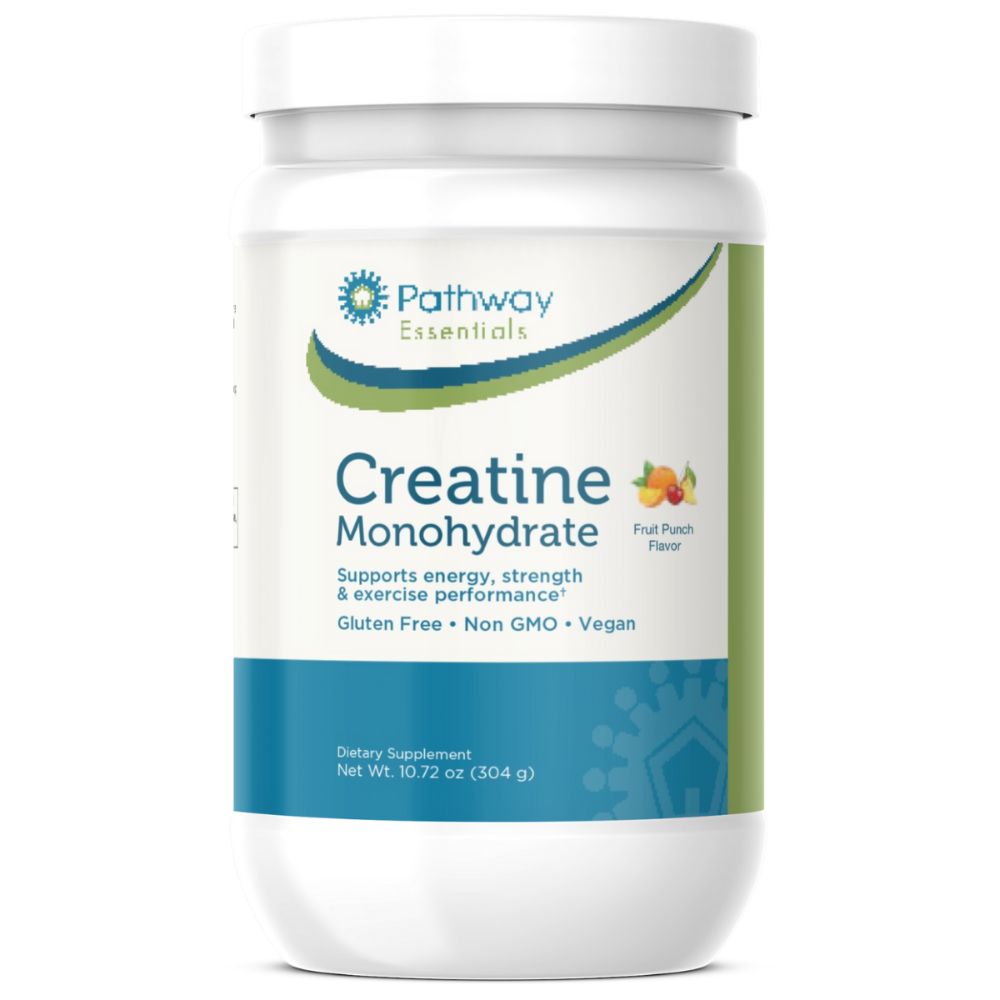
Monohidrato de creatina
No reviews
$32.45
$40.56
El monohidrato de creatina ya no es solo para atletas; ahora es un suplemento esencial para cualquiera que busque apoyar la fuerza, la resistencia y un envejecimiento saludable. Respaldado por una sólida investigación clínica, ayuda a llenar el vacío entre lo que produce el cuerpo y lo que se necesita para un rendimiento muscular y cognitivo óptimo.
La oportunidad de mercado para la creatina se está expandiendo rápidamente, impulsada tanto por sus beneficios bien establecidos en la nutrición deportiva como por su papel emergente en el envejecimiento saludable. Si bien el cuerpo produce pequeñas cantidades de creatina y parte se obtiene de alimentos como la carne roja y los mariscos, estas fuentes a menudo son insuficientes para alcanzar los niveles necesarios para un rendimiento muscular, recuperación y apoyo cardiovascular óptimos. El monohidrato de creatina suplementario llena este vacío de manera efectiva, con una sólida evidencia clínica que respalda su capacidad para mejorar la fuerza, la resistencia y la masa muscular. Lo que está impulsando una demanda aún mayor por parte de los consumidores es el creciente interés entre los adultos de mediana edad y mayores que están adoptando estilos de vida activos y buscan mantener la fuerza, la movilidad e incluso el rendimiento cognitivo a medida que envejecen. Este cambio ha creado una base de consumidores nueva y de rápido crecimiento, posicionando la creatina como un suplemento no solo para atletas, sino para cualquiera que busque bienestar y vitalidad a largo plazo.
Características:
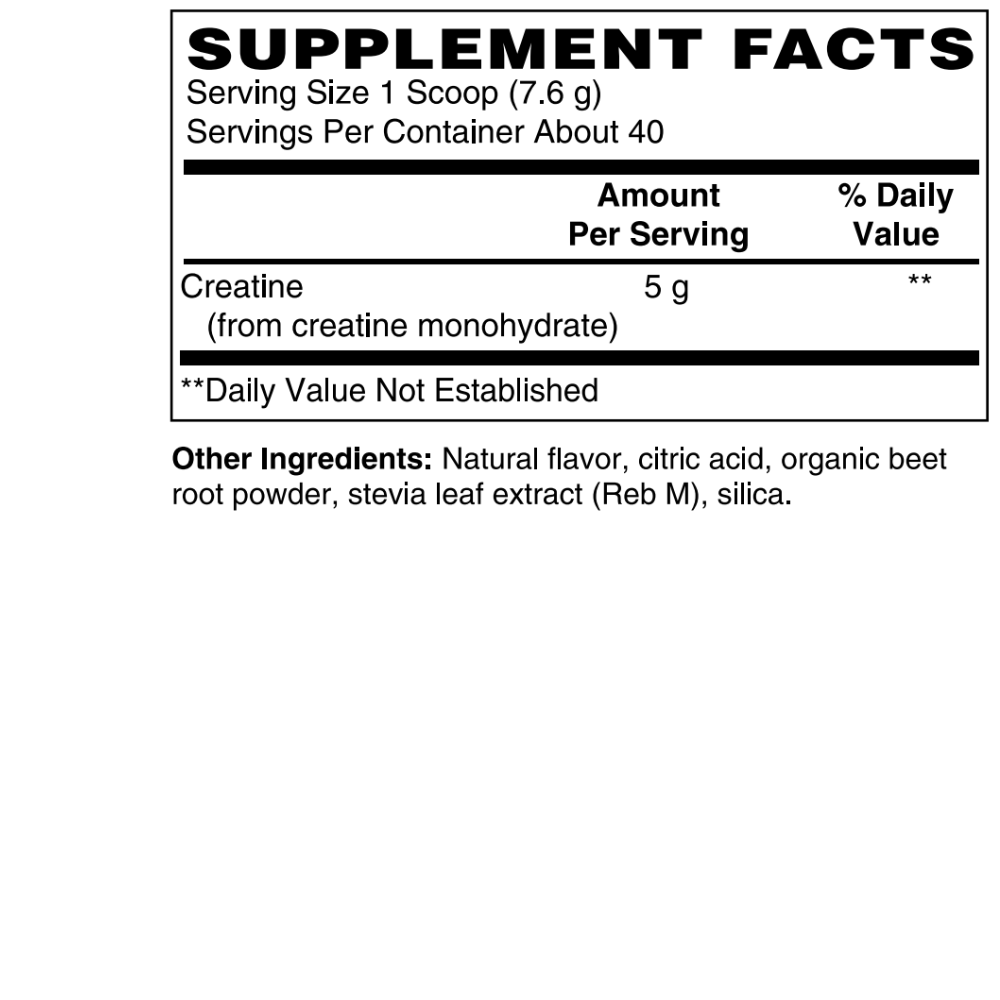
5 gramos de monohidrato de creatina pura de grado farmacéutico por porción (cucharadita)
Ponche de frutas con sabor natural
No contiene azúcar, sal, lácteos, levadura, trigo, gluten, huevos, cacahuetes, soja, frutos secos, pescado, mariscos, sésamo, conservantes, colorantes o sabores artificiales
Sin gluten, sin OMG y vegano
Beneficios:
Apoya la energía, la fuerza y el rendimiento físico.
El monohidrato de creatina sirve como fuente de grupos fosfato. Esto permite que la principal fuente de energía del cuerpo (ATP) se mantenga en niveles óptimos.
Los niveles óptimos de ATP, particularmente en el tejido muscular, ayudan a apoyar y mejorar el rendimiento y la resistencia muscular.
La investigación científica ha verificado que la creatina aumenta la fuerza muscular, la masa corporal magra y la energía muscular, al tiempo que acelera la recuperación de energía durante el ejercicio intenso.
Los estudios demuestran que el monohidrato de creatina puede ayudar a reducir la fatiga muscular al disminuir la acumulación de ácido láctico en el tejido muscular después de actividades, ejercicios, etc. que requieren breves estallidos de máxima energía.
La creatina regenera la energía ATP para aumentar el tiempo de trabajo muscular en la actividad anaeróbica, lo que ayuda a un entrenamiento más intenso que mejora aún más la fuerza y el crecimiento muscular al retrasar la fatiga muscular.
Uso sugerido:
Como suplemento dietético, los adultos toman una (1) medida en ocho (8) oz. de agua, cuatro (4) veces al día durante los primeros cinco (5) días (fase de carga).
Después de la fase de carga, tome una (1) o dos (2) veces al día, o según las indicaciones de un profesional de la salud.
Instrucciones de almacenamiento:
Almacenar en un lugar fresco y seco, lejos de la luz directa.
Advertencia:
MANTENER FUERA DEL ALCANCE DE LOS NIÑOS.
venta
PATHWAY
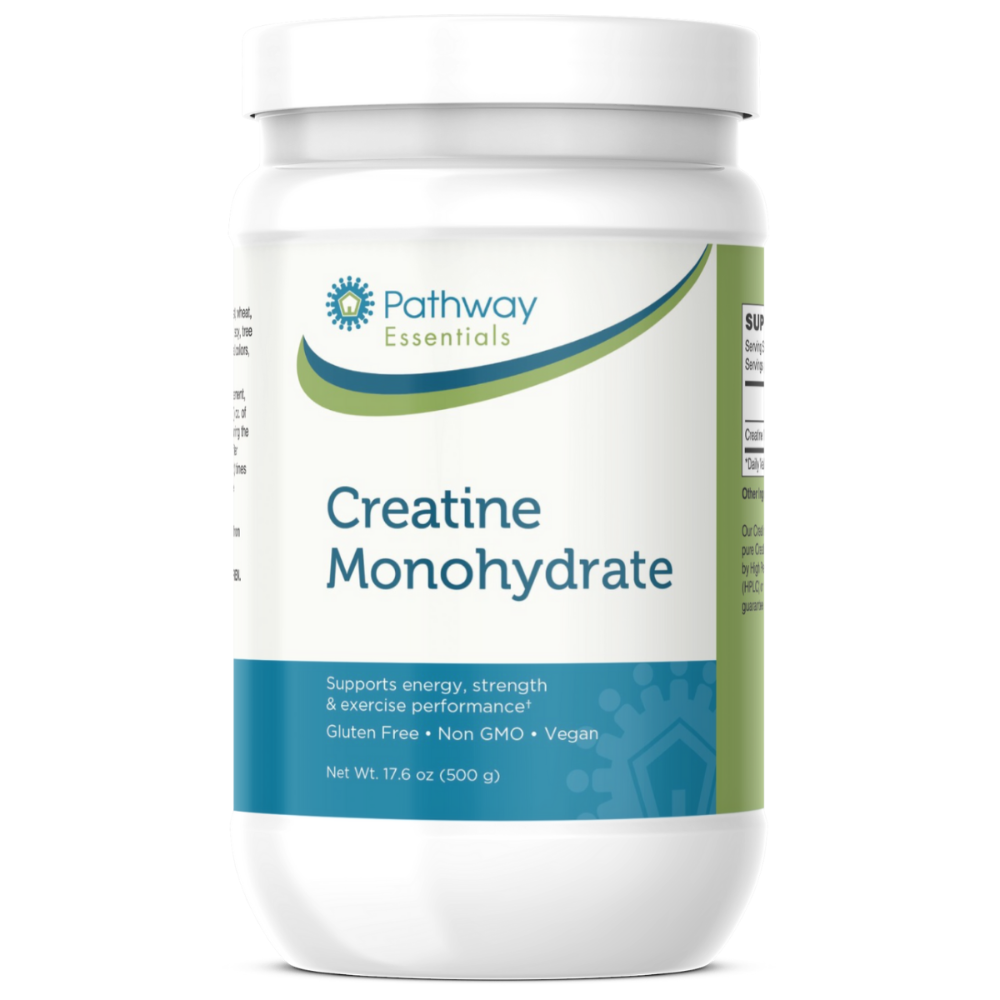
Monohidrato de creatina
No reviews
$44.93
$56.16
El cuerpo puede producir pequeñas cantidades de creatina, principalmente en el hígado y los riñones. Esta creatina es transportada a través de la sangre al músculo esquelético, que la requiere para un rendimiento óptimo. Desafortunadamente, la cantidad de creatina que se ha demostrado en estudios de investigación clínica que ayuda a apoyar y mejorar el rendimiento del ejercicio, la síntesis de proteínas musculares y funciones relacionadas es mucho mayor de lo que el cuerpo puede producir y de lo que consumimos en nuestra dieta. Aquí es donde entra en juego la creatina suplementaria como monohidrato de creatina. Varios gramos de monohidrato de creatina suplementario pueden proporcionar un apoyo significativo a los músculos que trabajan y se ha demostrado que aumentan el rendimiento, la fuerza y la masa muscular. La mayoría de las investigaciones sobre la creatina han utilizado monohidrato de creatina de alta calidad y grado farmacéutico. Nuestro monohidrato de creatina es fabricado por un líder mundial reconocido en la investigación, el desarrollo y la fabricación de creatina. Ofrecemos esta marca de creatina, ya que es la más utilizada en estudios de investigación y ha demostrado ser eficaz en atletas y también en aquellas personas que solo buscan esa "ventaja" que les ayude a alcanzar sus metas de estado físico y atléticas.
Características:
El monohidrato de creatina de grado farmacéutico más puro, fabricado según los estándares más estrictos de la industria.
Probado consistentemente y demostrado que está libre de creatinina, diciandiamida y dihidrotriazina, impurezas que se encuentran típicamente en productos de creatina de mala calidad.Fabricado mediante un proceso patentado que proporciona el producto terminado de la más alta calidad; uno que se ha utilizado en más estudios de investigación que cualquier otra creatina en el mundo.
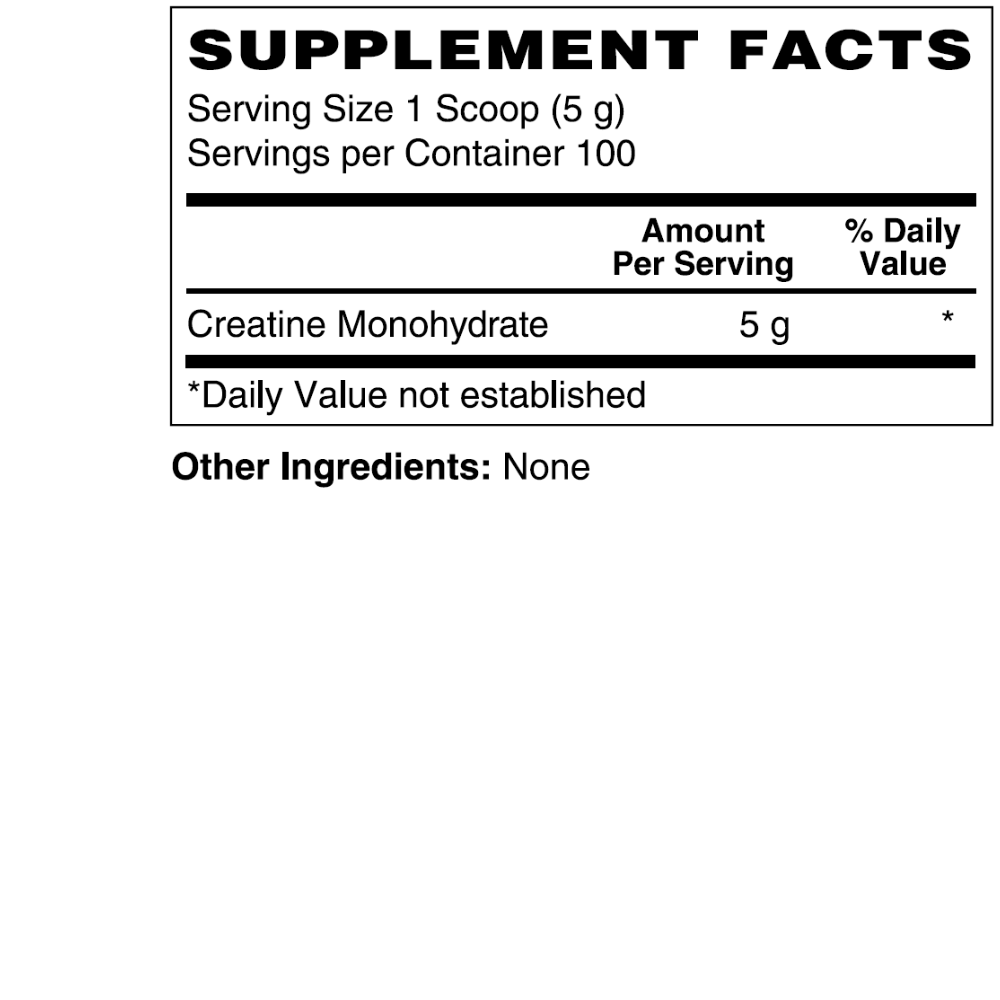
Proporciona 5 gramos de monohidrato de creatina pura por porción (cucharadita).
Beneficios:
El monohidrato de creatina sirve como fuente de grupos fosfato. Esto permite que la principal fuente de energía del cuerpo (ATP) se mantenga en niveles óptimos.
Los niveles óptimos de ATP, particularmente en el tejido muscular, ayudan a mantener y mejorar el rendimiento y la "resistencia" muscular.
La investigación científica ha verificado que la creatina aumenta la fuerza muscular, la masa corporal magra y la energía muscular, al tiempo que acelera la recuperación de energía durante el ejercicio intenso.
Los estudios demuestran que el monohidrato de creatina puede ayudar a reducir la fatiga muscular al reducir la acumulación de ácido láctico en el tejido muscular después de actividades, ejercicios, etc., que requieren ráfagas cortas de energía máxima.
Ayuda a mantener un entrenamiento más intenso, lo que mejora aún más la fuerza y el crecimiento muscular al retrasar la fatiga muscular. (La creatina regenera la energía del ATP para aumentar el tiempo de trabajo muscular en la actividad anaeróbica).
Uso sugerido:
Como suplemento dietético, los adultos toman una (1) cucharada en ocho (8) oz. de agua o jugo, cuatro (4) veces al día durante los primeros cinco (5) días (fase de carga).
Después de la fase de carga, tomar una (1) o dos (2) veces al día, o según las indicaciones de un profesional de la salud.
Instrucciones de almacenamiento:
Almacenar en un lugar fresco y seco
Mantener alejado de la luz directa
MANTENER FUERA DEL ALCANCE DE LOS NIÑOS.
venta
PATHWAY
Péptidos de Colágeno en Polvo
No reviews
$31.51
$39.39
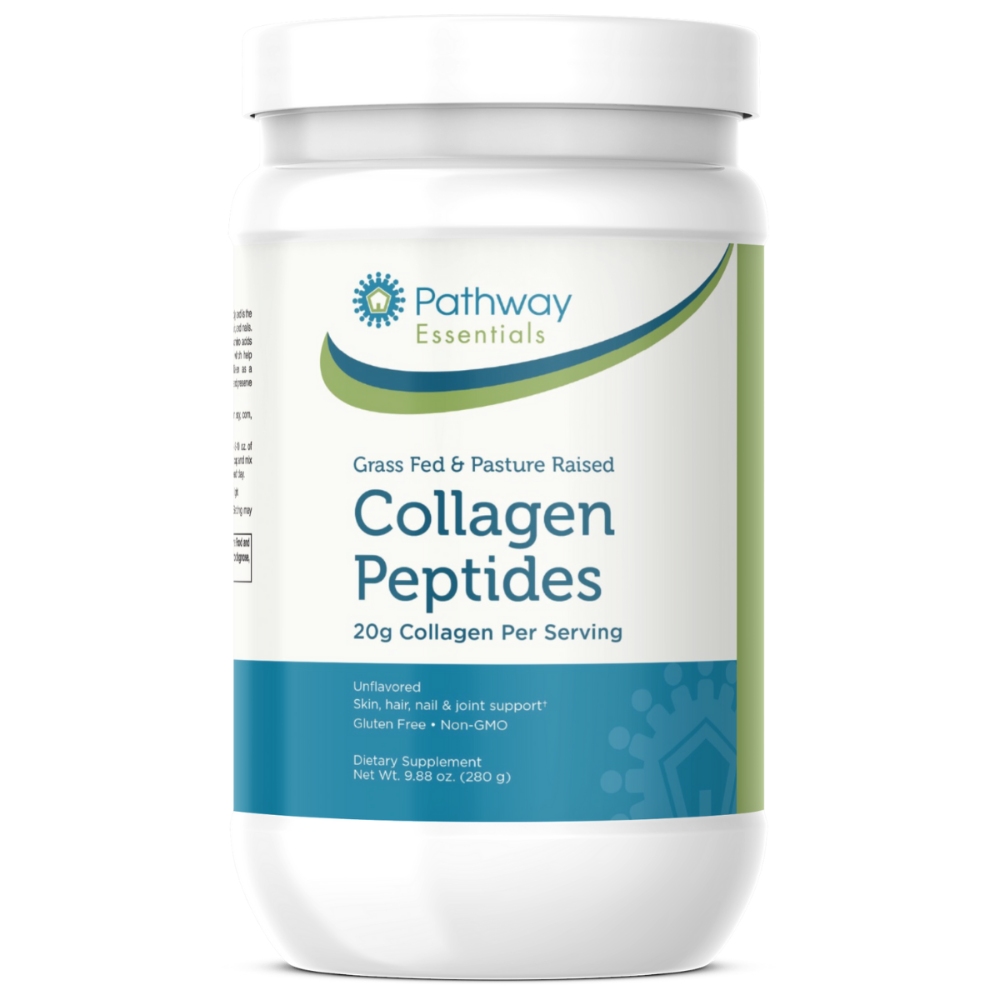
El colágeno es la proteína más abundante en el cuerpo y el componente principal del tejido conectivo. Es la proteína dura y fibrosa en el cabello, las uñas, los tendones, los ligamentos y la piel. El colágeno ayuda a preservar la elastina en la piel, ayudando a que se mantenga tonificada y flexible, y el colágeno también le da a los tendones y ligamentos su dureza. A medida que envejecemos, nuestro cuerpo comienza a producir menos colágeno, que es una de las razones por las que la piel comienza a flacidez y las articulaciones se vuelven dolorosas. Nuestro Colágeno en Polvo de Péptidos es hidrolizado y contiene colágeno tipo 1 y 3 que apoya la salud de la piel, los músculos y los huesos. El colágeno hidrolizado es más fácil de absorber, lo que permite que los aminoácidos se utilicen de manera más eficiente. El colágeno en polvo de péptidos es rico en los aminoácidos glicina, prolina, hidroxiprolina y alanina, lo que ayuda a promover la síntesis de colágeno en nuestro cuerpo.
Características:
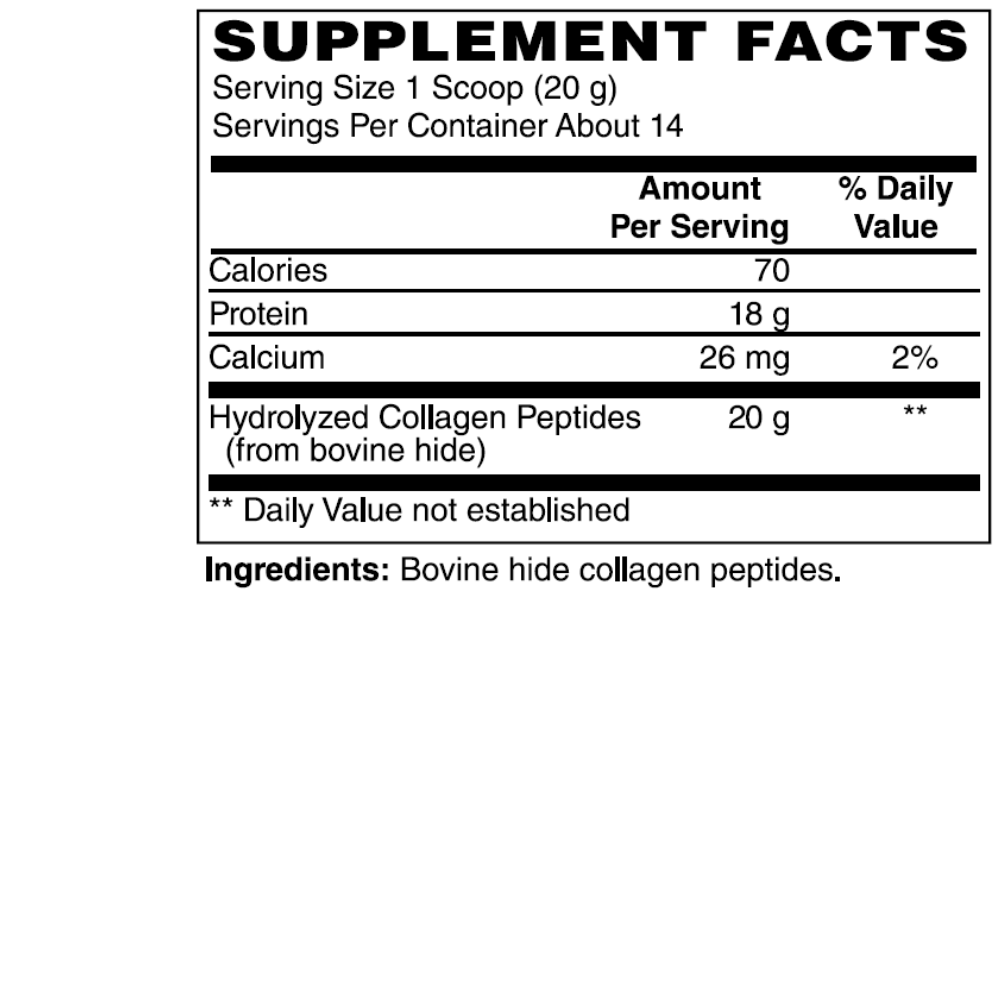
20 g de péptidos de colágeno por porción
Colágeno bovino alimentado con pasto y criado en pastos
Colágeno hidrolizado tipo 1 y 3
Sin OGM y sin excipientes
Sin sabor y sin endulzar (también disponible en chocolate y vainilla)
Se mezcla instantáneamente
Sin gluten, lácteos ni soja
Sin rellenos ni ingredientes artificiales
Beneficios:
Apoya una respuesta inflamatoria saludable.
Apoya la función y movilidad de las articulaciones.
Puede apoyar la salud del revestimiento del tracto intestinal.
Fortalece el tejido conectivo y ayuda a la recuperación del estrés físico o trauma.
Fortalece la matriz extracelular y ayuda a formar fibroblastos para crear nuevas células cutáneas.
Ayuda a fortalecer y reafirmar la elastina en la capa dérmica de la piel, proporcionando un efecto antienvejecimiento.
Uso sugerido:
Agregue una (1) cucharada rasa a 8-10 oz. de agua fría o su bebida preferida en un vaso mezclador.
Mezcle durante aproximadamente 5 segundos.
Beba y disfrute de un batido cada día.
Instrucciones de almacenamiento:
Almacenar en un lugar fresco y seco
Mantener alejado de la luz directa
MANTENER FUERA DEL ALCANCE DE LOS NIÑOS.
venta
PATHWAY
Péptidos de Colágeno en Polvo
No reviews
$57.30
$71.63
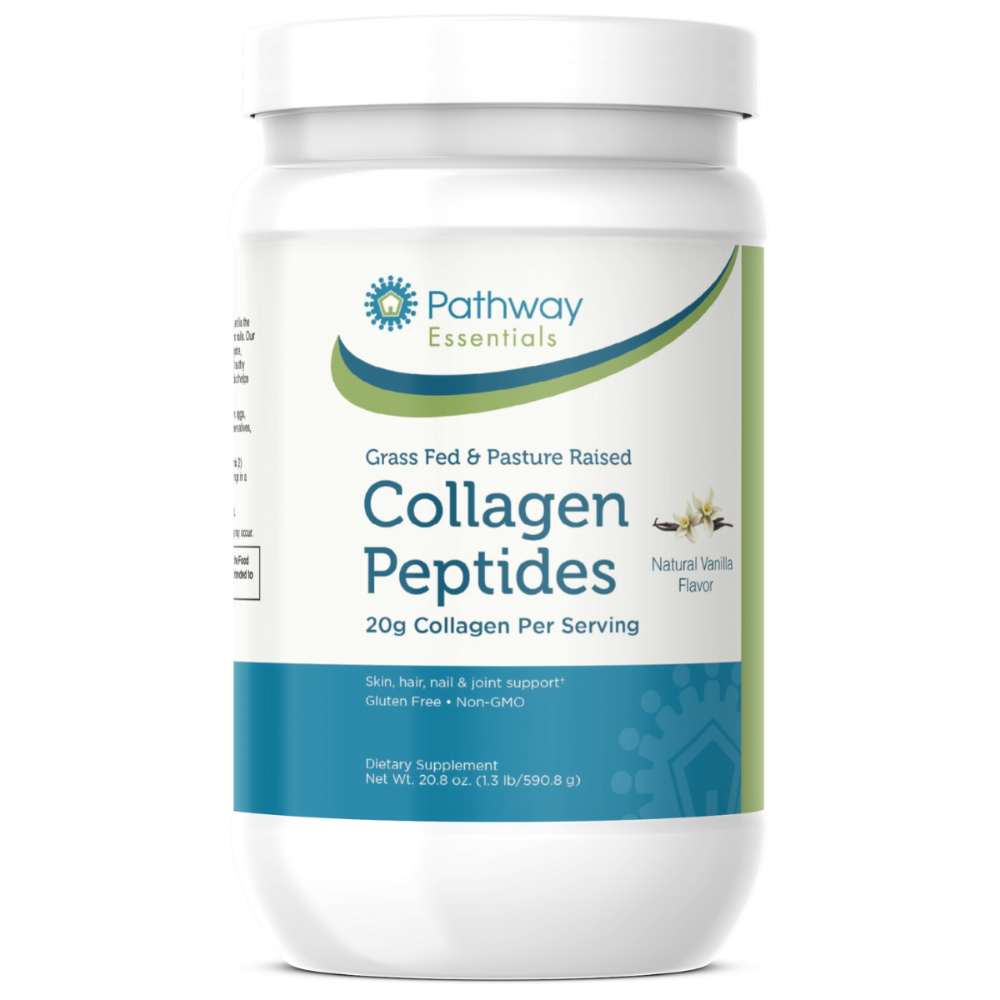
El colágeno es la proteína más abundante en el cuerpo y es el componente principal del tejido conectivo. Es la proteína resistente y fibrosa del cabello, las uñas, los tendones, los ligamentos y la piel. El colágeno ayuda a preservar la elastina de la piel, ayudando a que se mantenga tonificada y flexible, y también da a los tendones y ligamentos su resistencia. A medida que envejecemos, nuestro cuerpo comienza a producir menos colágeno, lo que es una de las razones por las que la piel comienza a caerse y las articulaciones se vuelven dolorosas. Nuestro Colágeno en polvo de péptidos está hidrolizado y contiene colágeno tipo 1 y 3 que apoya la salud de la piel, los músculos y los huesos. El colágeno hidrolizado es más fácil de absorber, lo que permite que los aminoácidos se utilicen de manera más eficiente. El Colágeno en polvo de péptidos es rico en los aminoácidos glicina, prolina, hidroxiprolina y alanina, que ayudan a promover la síntesis de colágeno en nuestro cuerpo.
Características:
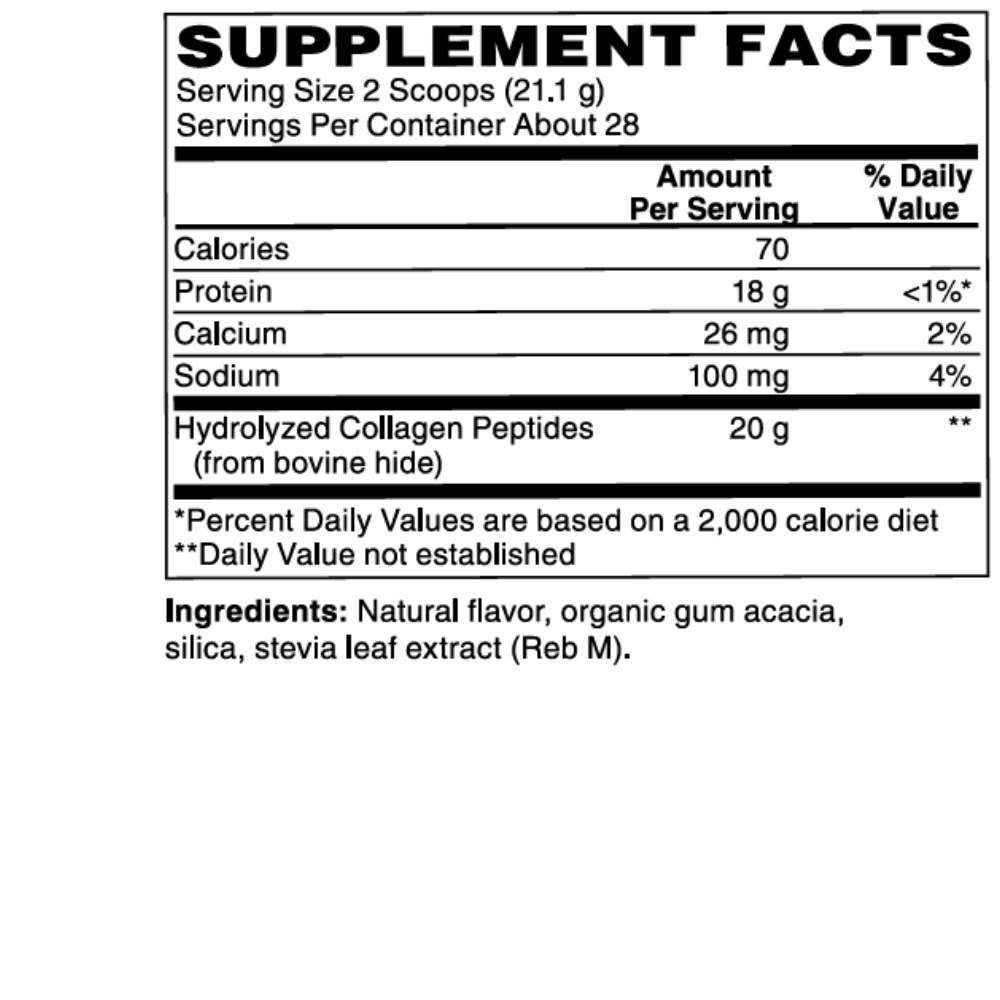
20 g de péptidos de colágeno por porción
Colágeno bovino alimentado con pasto y criado en pastizales
Colágeno hidrolizado tipo 1 y 3
Sin OGM con excipientes simples y limpios
Delicioso sabor a vainilla (también disponible en chocolate y sin sabor)
Se mezcla instantáneamente
Sin gluten, lácteos ni soja
Sin rellenos ni ingredientes artificiales
Beneficios:
Apoya una respuesta inflamatoria saludable.
Apoya la función y movilidad articular.
Puede apoyar la salud del revestimiento del tracto intestinal.
Fortalece el tejido conectivo y ayuda a la recuperación del estrés físico o trauma.
Fortalece la matriz extracelular y ayuda a formar fibroblastos para crear nuevas células cutáneas.
Ayuda a fortalecer y reafirmar la elastina en la capa de la dermis de la piel, proporcionando un efecto antienvejecimiento.
Uso sugerido:
Como suplemento dietético, los adultos mezclan dos (2) cucharadas al día con 8-10 fl. oz. de su bebida favorita en un vaso mezclador o licuadora.
Instrucciones de almacenamiento:
Almacenar en un lugar fresco y seco
Mantener alejado de la luz directa
MANTENER FUERA DEL ALCANCE DE LOS NIÑOS.
venta
PATHWAY
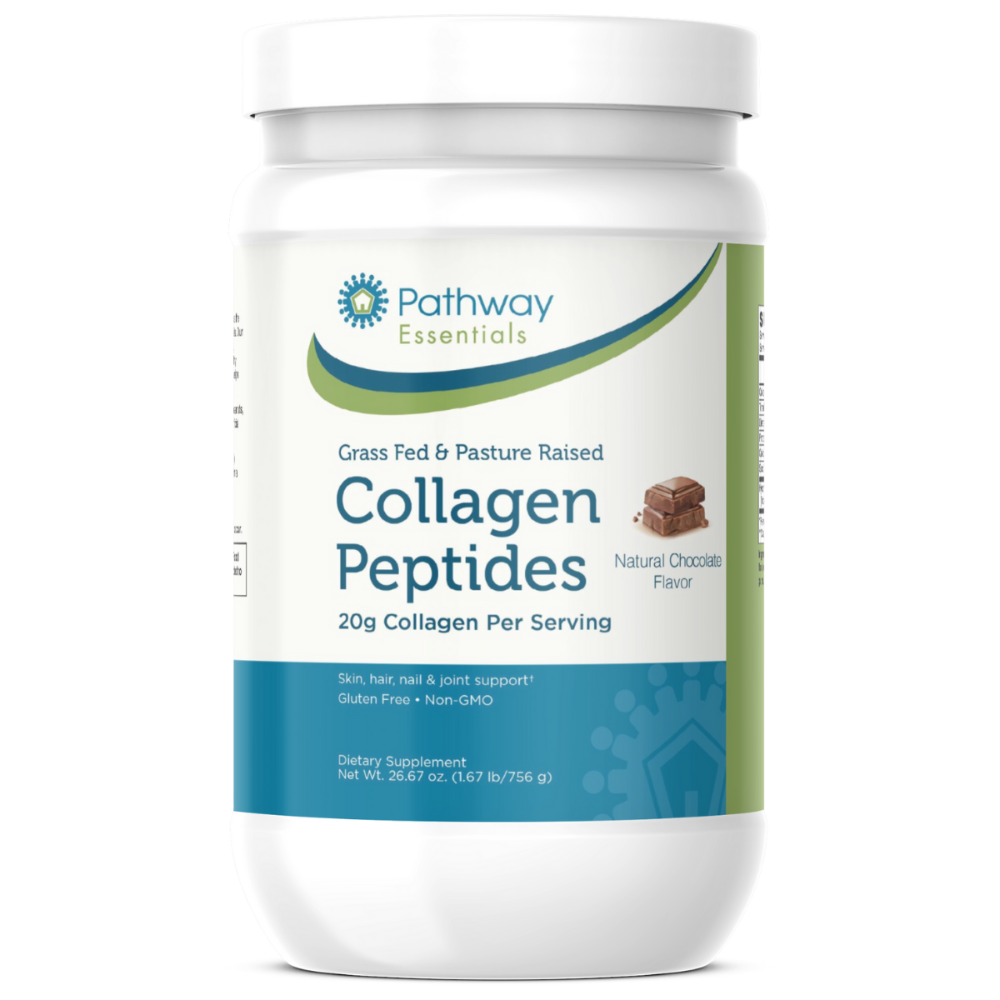
Péptidos de Colágeno en Polvo
No reviews
$57.30
$71.63
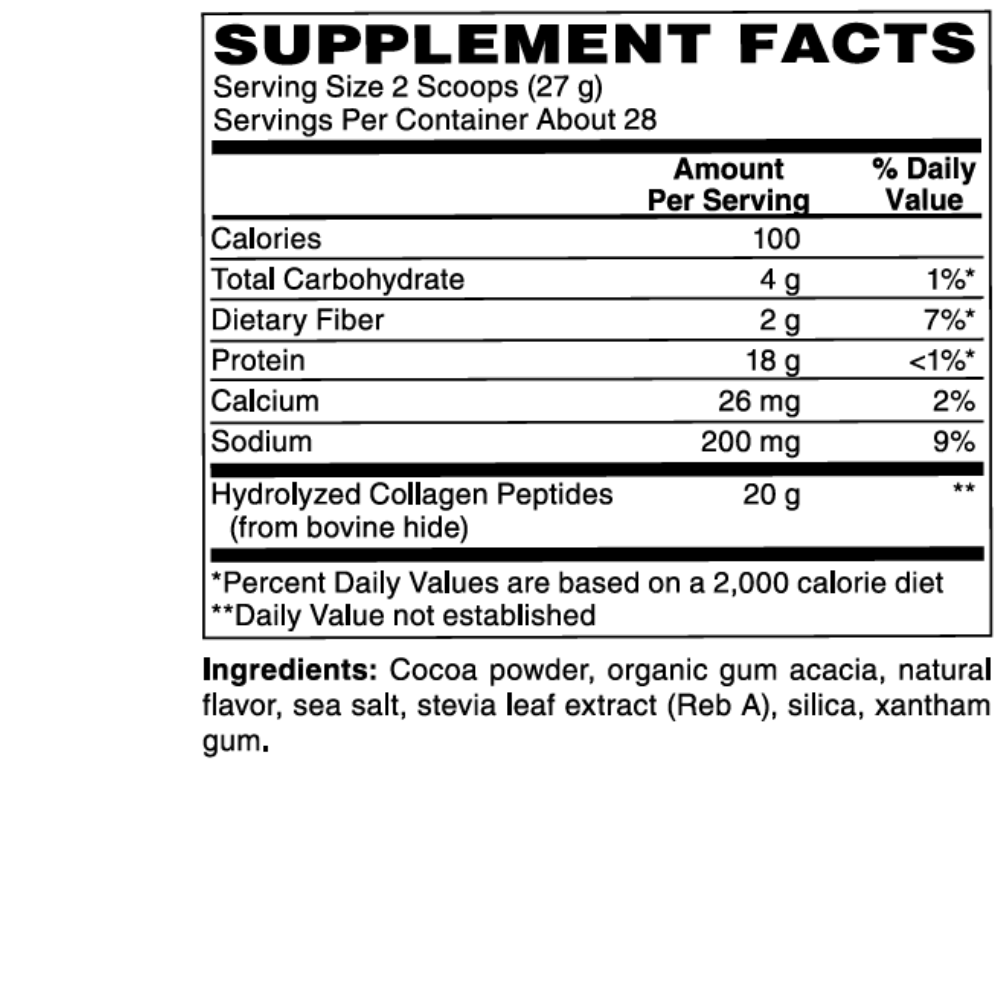
El colágeno es la proteína más abundante en el cuerpo y es el componente principal del tejido conectivo. Es la proteína resistente y fibrosa del cabello, las uñas, los tendones, los ligamentos y la piel. El colágeno ayuda a preservar la elastina en la piel, ayudando a que se mantenga tonificada y flexible, y también le da a los tendones y ligamentos su resistencia. A medida que envejecemos, nuestro cuerpo comienza a producir menos colágeno, lo que es una de las razones por las que la piel comienza a ceder y las articulaciones se vuelven dolorosas. Nuestro Colágeno en polvo con péptidos es hidrolizado y contiene colágeno tipo 1 y 3 que apoya la salud de la piel, los músculos y los huesos. El colágeno hidrolizado es más fácil de absorber, lo que permite que los aminoácidos se utilicen de manera más eficiente. El colágeno en polvo con péptidos es rico en los aminoácidos glicina, prolina, hidroxiprolina y alanina, lo que ayuda a promover la síntesis de colágeno en nuestro cuerpo.
Características:
20 g de péptidos de colágeno por porción
Colágeno bovino alimentado con pasto y criado en pasturas
Colágeno hidrolizado tipo 1 y 3
Sin OGM con excipientes simples y limpios
Delicioso sabor a chocolate (también disponible en vainilla y sin sabor)
Se mezcla instantáneamente
Sin gluten, lácteos ni soja
Sin rellenos ni ingredientes artificiales
Beneficios:
Apoya una respuesta inflamatoria saludable.
Apoya la función y movilidad de las articulaciones.
Puede apoyar la salud del revestimiento del tracto intestinal.
Fortalece el tejido conectivo y ayuda en la recuperación del estrés físico o trauma.
Fortalece la matriz extracelular y ayuda a formar fibroblastos para crear nuevas células cutáneas.
Ayuda a fortalecer y reafirmar la elastina en la capa dérmica de la piel, proporcionando un efecto antienvejecimiento.
Uso sugerido:
Como suplemento dietético, los adultos mezclan dos (2) cucharadas diarias con 8–10 fl. oz. de su bebida favorita en un vaso mezclador o licuadora.
Instrucciones de almacenamiento:
Almacenar en un lugar fresco y seco
Mantener alejado de la luz directa
MANTENER FUERA DEL ALCANCE DE LOS NIÑOS.
References
- A systematic review of the effect of semaglutide on lean mass: insights from clinical trials
- Weight Loss Strategies and the Risk of Skeletal Muscle Mass Loss
- Incretin-Based Weight Loss Pharmacotherapy: Can Resistance Exercise Optimize Changes in Body Composition?
- Strategies for minimizing muscle loss during use of incretin-mimetic drugs for treatment of obesity
- NIH Office of Dietary Supplements — Magnesium Fact Sheet for Health Professionals
- Optimizing Weight Loss in the GLP-1 Era: Preserving Muscle Mass, Function and Metabolic Health Through Precision Nutrition and Resistance Training (2026)
- Nutrition-First Support for GLP-1 and Dual Incretin Therapy in Obesity: A Practical Framework for Dietary Management, Symptom Tolerability, and Long-Term Weight Maintenance (2026)
- Sculpting Success: The Importance of Diet and Physical Activity to Support Skeletal Muscle Health during Weight Loss with New Generation Anti-Obesity Medications (2024)
- Micronutrient risk with GLP-1 receptor and dual incretin agonists in obesity: Mechanistic pathways, clinical signals, and a monitoring framework (2026)
- Creatine supplementation affects muscle creatine during energy restriction (Med Sci Sports Exerc, 2001)
- Nutritional priorities to support GLP-1 therapy for obesity: a joint advisory from the American College of Lifestyle Medicine, the American Society for Nutrition, the Obesity Medicine Association, and The Obesity Society (Obesity, 2025)
Categories
Categories
Humanized Health - NEW!
Learn about personalized health from top experts! Check out our fascinating new shows every week, available as videos, podcasts and transcripts.:
Our Bloggers
-
 Paula Gallagher
Paula is a highly qualified and experienced nutrition counselor on the staff at Village Green.
read more.. -
 Margo Gladding
Margo's impressive knowledge base is the result of a unique blend of educational and professional experience.
read more.. -
 Dr. Neal Barnard
Dr. Barnard leads programs advocating for preventive medicine, good nutrition, and higher ethical standards in research.
read more.. -
 Dr. Joseph Pizzorno
Dr. Joseph Pizzorno, ND is a pioneer of integrative medicine and a leading authority on science-based natural medicine.
read more.. -
 Debi Silber
Debi is a registered dietitian with a master’s degree in nutrition, a personal trainer, and whole health coach.
read more..
SEE ALL OF OUR BLOGGERS
Invalid password
Enter


Learning Resources
Consultas
Farmacia/Preparación de medicamentos
Salud Humanizada
Blog de Village Green
General Information
Contáctenos
Sobre nosotros
Política de privacidad
Oportunidades de Empleo
Programa de afiliados
Stay Connected
Village Green Apothecary
5415 W Cedar Ln
Bethesda, Maryland, 20814
(301) 530-0800
Toll Free: (800) 869-9159
The information provided on this site is not intended to be a substitute for advice or treatment from a qualified physician, nor is it intended to diagnose or treat a health problem or disease. Consult your physician prior to starting any new health program or if you any questions regarding a medical condition.
© 2025 Village Green Apothecary - All Rights Reserved.
