 FREE SHIPPING! Automatically Applied on Orders Over $74!



La tiroides es una pequeña glándula con forma de mariposa en la base del cuello. Pesa solo unos 20 gramos. Sin embargo, las hormonas que segrega son esenciales para el crecimiento y el metabolismo, y regulan la función corporal. Aunque la glándula tiroides juega un papel en el metabolismo y la regulación de la temperatura, esta pequeña glándula es mucho más que eso. De hecho, la tiroides es una de las glándulas más esenciales para regular la salud en general. Desafortunadamente, puede ser dañada fácilmente por toxinas, deficiencias de nutrientes y estrés.
Las funciones de la tiroides incluyen:
- Tasa metabólica y mantenimiento del peso
- Crecimiento
- Niveles saludables de colesterol
- Función cardiovascular saludable
- Aprendizaje, memoria y estado de ánimo
- Desarrollo saludable del embrión y el feto
La tiroides produce dos hormonas principales, T4 y T3, que están compuestas de yodo y el aminoácido tirosina. La mayor parte de la producción de hormonas tiroideas es T4 (el número 4 representa el número de moléculas de yodo unidas a la tirosina), que se considera inactiva y no afecta el metabolismo directamente. La T3, la hormona tiroidea activa, se forma dentro de las células del cuerpo con la ayuda del selenio.
Se estima que casi el 60% de las personas no son diagnosticadas con una afección tiroidea. El diagnóstico generalmente se realiza después de un análisis de sangre, junto con los signos que su médico puede notar y los síntomas reportados. Los siguientes síntomas son a menudo indicios de que su glándula tiroides no está funcionando de manera óptima:
1. Fatiga
La falta de energía puede ser causada por muchas cosas; sin embargo, si constantemente se siente arrastrado y no puede funcionar sin café, podría ser una señal de una tiroides hipoactiva. Además, si necesita dormir más de 9 horas por noche para sentirse descansado, podría ser una indicación de un desequilibrio tiroideo subyacente. Un desequilibrio también puede afectar la calidad de su sueño.
2. Aumento de peso
Los cambios de peso inexplicables y los problemas pueden ser signos de hipotiroidismo o hipertiroidismo (una tiroides hipoactiva o hiperactiva). Si el ejercicio y una dieta saludable no ayudan a mantener el peso, podría ser otra señal de que algo anda mal con su tiroides.
3. Piel seca y/o pérdida de cabello
Con el hipotiroidismo (tiroides baja), el cabello a menudo se vuelve quebradizo, áspero y seco. La pérdida de cabello aumentada o el adelgazamiento del cabello también son síntomas comunes del hipotiroidismo. La piel puede volverse muy seca, escamosa y con escamas.
4. Depresión/Ansiedad
La depresión o la ansiedad pueden ser un síntoma de enfermedad tiroidea. Si bien a menudo hay otros factores subyacentes involucrados, las funciones tiroideas y suprarrenales deben ser las primeras áreas de evaluación al tratar la ansiedad o la depresión.
5. Problemas menstruales e infertilidad
Nuestras hormonas trabajan sinérgicamente: cuando una hormona está desequilibrada, a menudo es necesario investigar otra vía hormonal. Los períodos más abundantes, frecuentes y dolorosos a veces se asocian con el hipotiroidismo. La infertilidad también puede asociarse con una afección tiroidea no diagnosticada.
venta
PATHWAY
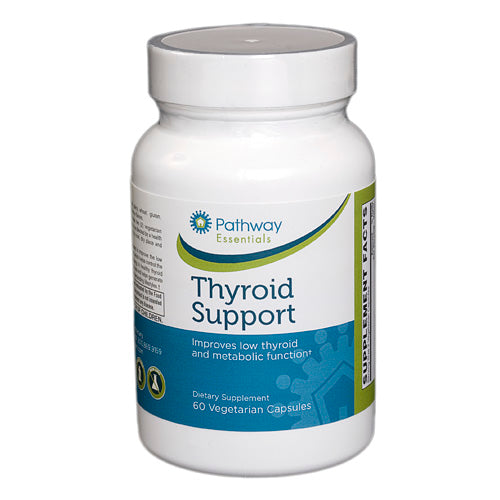
Apoyo para la tiroides
No reviews
$20.29
$28.99
Fórmula Completa para Apoyar la Función TiroideaPathway Thyroid Support contiene vitaminas, minerales y hierbas estandarizadas esenciales para ayudar a mantener una función tiroidea, un metabolismo y una respuesta al estrés saludables. Los ingredientes clave incluyen L-Tirosina, algas marinas, vitaminas A y D, selenio, bacopa y ashwagandha. Esta fórmula es vegetariana y sin gluten.Uso Sugerido: 2 cápsulas diarias con las comidas
Natural Ways to Boost Thyroid Function
It is estimated that 1 in 5 people have a suboptimal thyroid not detected through proper evaluation and testing. This is because often only TSH (thyroid stimulating hormone) and T4 are checked, which only provide part of the picture. It is important to have a thorough test done. A Thyroid Analysis panel provides a comprehensive analysis of thyroid hormone metabolism. It includes central thyroid gland regulation and activity, thyroid production and secretion, peripheral thyroid conversion, and thyroid autoimmunity. This test analyzes serum levels of TSH, free T4, free T3, reverse T3, anti-TG antibodies, and anti-TPO antibodies to assess central and peripheral thyroid function, as well as thyroid auto-immunity.
If you have low thyroid function, there are nutrients that can help support its function. Before taking any supplement, consult with your primary care practitioner to make sure you are taking the right thing. In some cases, a prescription may be necessary.
Iodine: All you need is 150 mcg, and if you are a salt consumer, you may be getting all you need. Too much iodine can be as problematic as too little. If you use non-iodized salt, you may want to consider sources such as eggs and seaweed (kelp) to get iodine.
Tyrosine: If you are deficient in this important amino acid, your body will be limited to how much thyroid hormone it can make. Start off at a low dose of 200 mg or even less, and work up to 500 mg, if tolerated well. For some, L-Tyrosine can be too energizing, so you wouldn't want to take it before bed.
Selenium (in the form of selenomethionine): Selenium is an important trace element and antioxidant required for healthy thyroid hormone production and metabolism. Shiitake mushrooms, salmon, Brazil nuts and garlic are all good sources of selenium.
Supplement blend: A comprehensive supplement blend can also provide all the nutrients above plus other essential vitamins, minerals, and standardized herbs to help support healthy thyroid function, metabolism and stress response.
Categories
Categories
Humanized Health - NEW!
Learn about personalized health from top experts! Check out our fascinating new shows every week, available as videos, podcasts and transcripts.:
Our Bloggers
-
 Paula Gallagher
Paula is a highly qualified and experienced nutrition counselor on the staff at Village Green.
read more.. -
 Margo Gladding
Margo's impressive knowledge base is the result of a unique blend of educational and professional experience.
read more.. -
 Dr. Neal Barnard
Dr. Barnard leads programs advocating for preventive medicine, good nutrition, and higher ethical standards in research.
read more.. -
 Dr. Joseph Pizzorno
Dr. Joseph Pizzorno, ND is a pioneer of integrative medicine and a leading authority on science-based natural medicine.
read more.. -
 Debi Silber
Debi is a registered dietitian with a master’s degree in nutrition, a personal trainer, and whole health coach.
read more..
SEE ALL OF OUR BLOGGERS
Invalid password
Enter


Learning Resources
Consultas
Farmacia/Preparación de medicamentos
Salud Humanizada
Blog de Village Green
General Information
Contáctenos
Sobre nosotros
Política de privacidad
Oportunidades de Empleo
Programa de afiliados
Stay Connected
Village Green Apothecary
5415 W Cedar Ln
Bethesda, Maryland, 20814
(301) 530-0800
Toll Free: (800) 869-9159
The information provided on this site is not intended to be a substitute for advice or treatment from a qualified physician, nor is it intended to diagnose or treat a health problem or disease. Consult your physician prior to starting any new health program or if you any questions regarding a medical condition.
© 2025 Village Green Apothecary - All Rights Reserved.
