 FREE SHIPPING! Automatically Applied on Orders Over $74!



Most people take creatine for muscle, but new research suggests creatine may also help fuel the immune cells that activate your body's cancer-fighting T cells. This is just a preliminary finding. The study has been conducted in animals and hasn't yet been tested in humans. However, it does provide more evidence to suggest creatine might do more than just build muscle in the gym. Here's what we know for sure about creatine, and what to do with that information if you're looking to add this supplement to a broader wellness plan.
What Creatine Actually Does in Your Body

The first thing I'd like to discuss is the mechanism of action; it explains everything else.
Creatine aids your cells to quickly replenish adenosine triphosphate (ATP) the fuel used for fast, intensive tasks. It's like having a battery backup.
Most of it is kept in muscle but it’s also used by the brain and immune cells, around 50% comes from your diet while the rest is made by the liver and kidneys.
-
To rapidly reconstitute ATP, creatine phosphate transfers a phosphate group.
-
Most of it is found in the skeletal muscle, though some is also stored in the brain.
-
Your body makes its own supply of about 1 gram each day.
The Fuel Behind Your Immune Cells
This is where it gets a bit weird. Immune cells are hungry for energy.
When activated immune cells start working to combat an infection, they require an immediate source of energy. That is the kind of need creatine has been designed to fill.
So can creatine boost your immune system? Real answer: early studies in cells show potential benefits for the energy cells depend on, but we still have more work to do to determine if this effect translates to humans.
Creatine and Cancer-Fighting T Cells

This is the headline result. Back in July 2026, UCLA Health said creatine can give dendritic cells a huge boost.
The immune system’s “distant early warning system” is the dendritic cell, which recognizes a cancer cell and activates killer T cells, the “hit squad” of immune cells that identify and kill cancer or other abnormal cells.
By energizing dendritic cells, creatine could help strengthen one of the immune system's key anti-tumor pathways. Studies have even found that creatine could potentially increase the efficacy of immunotherapy in the future.
Another word of caution: These results are preclinical and haven't been tested in people yet. A sign that these results are promising, but not a treatment.
Can Creatine Weaken Your Immunity
That’s a fair question to go along with the good news. Is there any chance creatine actually diminishes or suppresses our immune function?
But the evidence doesn't really suggest that right now.
If you are receiving treatment for cancer, or you have a diagnosed immune condition, please direct this discussion to your healthcare provider. This is not an area to self-start.
Where Your Body Gets Creatine

Food is important. Creatine in meat and fish is your main dietary source.
There is a considerable amount of this nutrient in red meat, pork, salmon and herring, and it is no surprise that vegetarians and vegans tend to have lower levels in their muscles, which is why many of them choose to take a supplement.
Forms and quality differ, and that's why a pharmacist can help. Here's a few things I take time to go over with our customers here at Village Green:
-
Creatine monohydrate is the most researched form, by a huge margin
-
Usually, studies have employed a maintenance dose of 3 to 5 g per day.
-
Powder dissolves readily in water and tends to be the most inexpensive option.
-
Quality and third-party testing are critical, so check the label.
Is Creatine Good for You
Creatine has an outstanding safety profile for those who are generally healthy, as it’s one of the most thoroughly researched ingredients in sports nutrition, with decades of research. It’s that broad, multi-system research that’s helped make it a star subject outside of athletic circles.
Some studies have looked at whether creatine can enhance the function of the brain, including memory and cognitive performance, especially among elderly individuals.
If you're ready to add creatine to your routine, Pathway Creatine Monohydrate provides pure creatine monohydrate. This is the form that is used in the majority of clinical research.
For guidance specific to your health needs, our team offers nutrition consultations.
Pregnant women, those with kidney disease and those on multiple medications should speak to a healthcare provider before using creatine.
Key Takeaways
-
Dendritic cells may be fueled by creatine and cause tumor-killing cells in the immune system to attack cancer, according to a UCLA study.
-
Most of the creatine goes to recycling the cells’ most easily available energy molecule: ATP. Your immune cells are included in that number.
-
Other studies have looked at creatine’s effects on memory in older people, mood in women, and its ability to help maintain lean muscle mass.
-
There are several forms and dosages, depending on your needs, so speak with one of our nutritionist’s about which is best for you.
Frequently Asked Questions
Can creatine boost immune system
Initial research conducted at UCLA indicates that creatine might stimulate dendritic cells, cells that play a role in activating T cells, which help attack cancer cells, that support one of the major immune-system pathways. But bear in mind that the results are preclinical and haven't been studied in people.
Can creatine affect immune system
While preliminary lab studies indicate that creatine may play a role in the energy dynamics of immune cells via ATP recycling, a rapid energy source utilized by these cells, the immune effects of creatine remain in a nascent stage of research. Human testing in this area is not yet available.
Can creatine improve immune system
The UCLA findings raise the possibility that creatine could help strengthen anti-tumor immune pathways by fueling dendritic cells. That is encouraging, though not yet a proven perk; more human trials are needed before we can make any claims about boosting the immune system.
Can creatine weaken immune system
There is no indication at this point that creatine suppresses or otherwise adversely affects the immune system in healthy individuals who take it at normal dosages. In 2021, a review of research on the supplement concluded that creatine appears to be well tolerated in healthy athletes and has a good safety profile. If you have a compromised immune system, you may want to consult with your health care team.
Can creatine lower immune system
No evidence shows that creatine inhibits or compromises immune function in healthy people. Studies conducted recently instead suggest it may provide beneficial energy to cells involved in immunity. People who are undergoing active cancer treatment should discuss supplements with their cancer care team.
venta
PATHWAY
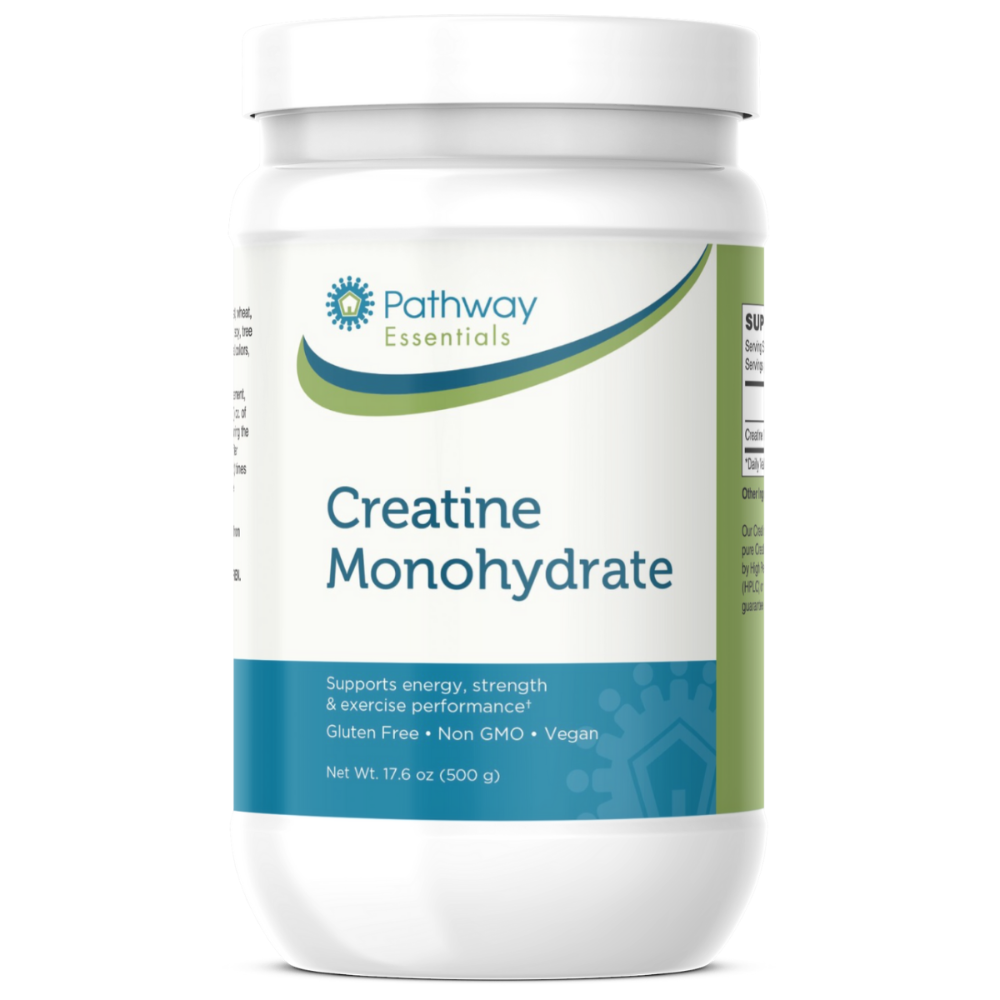
Monohidrato de creatina
No reviews
$39.31
$56.16
El cuerpo puede producir pequeñas cantidades de creatina, principalmente en el hígado y los riñones. Esta creatina es transportada a través de la sangre al músculo esquelético, que la requiere para un rendimiento óptimo. Desafortunadamente, la cantidad de creatina que se ha demostrado en estudios de investigación clínica que ayuda a apoyar y mejorar el rendimiento del ejercicio, la síntesis de proteínas musculares y funciones relacionadas es mucho mayor de lo que el cuerpo puede producir y de lo que consumimos en nuestra dieta. Aquí es donde entra en juego la creatina suplementaria como monohidrato de creatina. Varios gramos de monohidrato de creatina suplementario pueden proporcionar un apoyo significativo a los músculos que trabajan y se ha demostrado que aumentan el rendimiento, la fuerza y la masa muscular. La mayoría de las investigaciones sobre la creatina han utilizado monohidrato de creatina de alta calidad y grado farmacéutico. Nuestro monohidrato de creatina es fabricado por un líder mundial reconocido en la investigación, el desarrollo y la fabricación de creatina. Ofrecemos esta marca de creatina, ya que es la más utilizada en estudios de investigación y ha demostrado ser eficaz en atletas y también en aquellas personas que solo buscan esa "ventaja" que les ayude a alcanzar sus metas de estado físico y atléticas.
Características:
El monohidrato de creatina de grado farmacéutico más puro, fabricado según los estándares más estrictos de la industria.
Probado consistentemente y demostrado que está libre de creatinina, diciandiamida y dihidrotriazina, impurezas que se encuentran típicamente en productos de creatina de mala calidad.Fabricado mediante un proceso patentado que proporciona el producto terminado de la más alta calidad; uno que se ha utilizado en más estudios de investigación que cualquier otra creatina en el mundo.
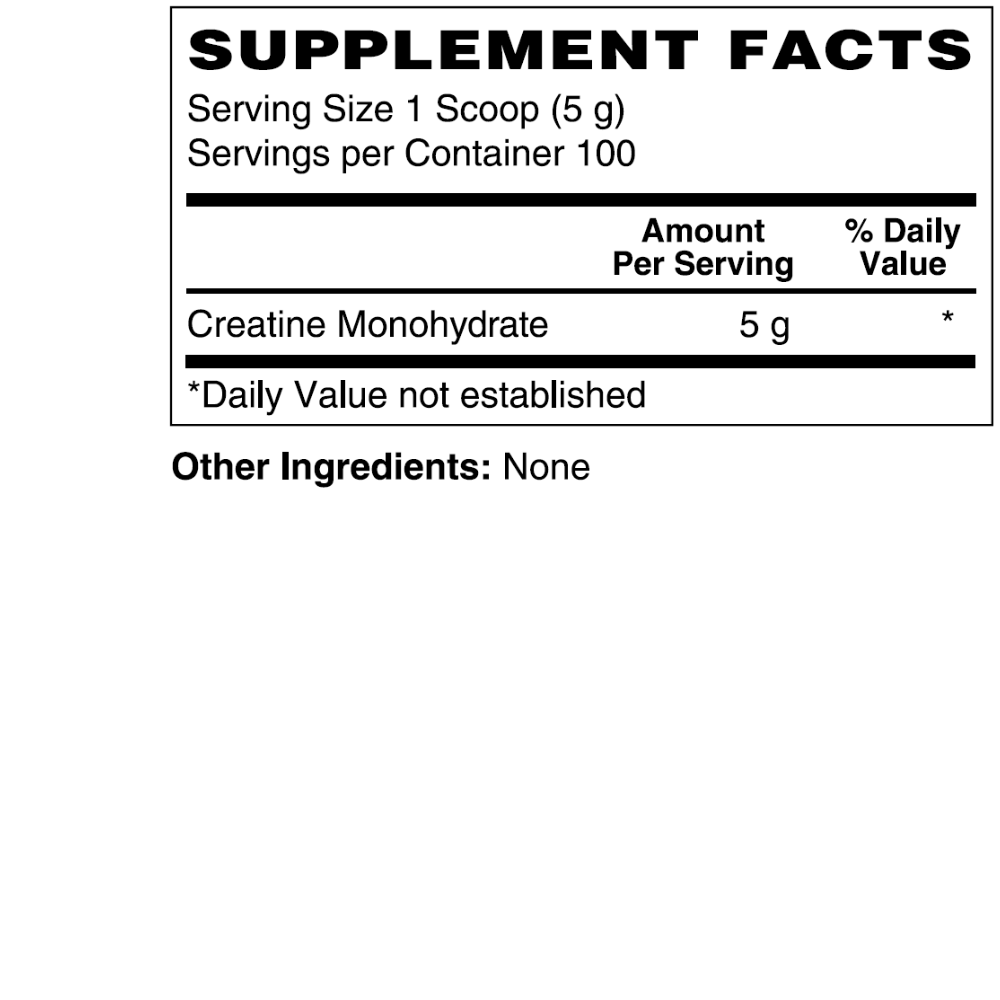
Proporciona 5 gramos de monohidrato de creatina pura por porción (cucharadita).
Beneficios:
El monohidrato de creatina sirve como fuente de grupos fosfato. Esto permite que la principal fuente de energía del cuerpo (ATP) se mantenga en niveles óptimos.
Los niveles óptimos de ATP, particularmente en el tejido muscular, ayudan a mantener y mejorar el rendimiento y la "resistencia" muscular.
La investigación científica ha verificado que la creatina aumenta la fuerza muscular, la masa corporal magra y la energía muscular, al tiempo que acelera la recuperación de energía durante el ejercicio intenso.
Los estudios demuestran que el monohidrato de creatina puede ayudar a reducir la fatiga muscular al reducir la acumulación de ácido láctico en el tejido muscular después de actividades, ejercicios, etc., que requieren ráfagas cortas de energía máxima.
Ayuda a mantener un entrenamiento más intenso, lo que mejora aún más la fuerza y el crecimiento muscular al retrasar la fatiga muscular. (La creatina regenera la energía del ATP para aumentar el tiempo de trabajo muscular en la actividad anaeróbica).
Uso sugerido:
Como suplemento dietético, los adultos toman una (1) cucharada en ocho (8) oz. de agua o jugo, cuatro (4) veces al día durante los primeros cinco (5) días (fase de carga).
Después de la fase de carga, tomar una (1) o dos (2) veces al día, o según las indicaciones de un profesional de la salud.
Instrucciones de almacenamiento:
Almacenar en un lugar fresco y seco
Mantener alejado de la luz directa
MANTENER FUERA DEL ALCANCE DE LOS NIÑOS.
venta
PATHWAY
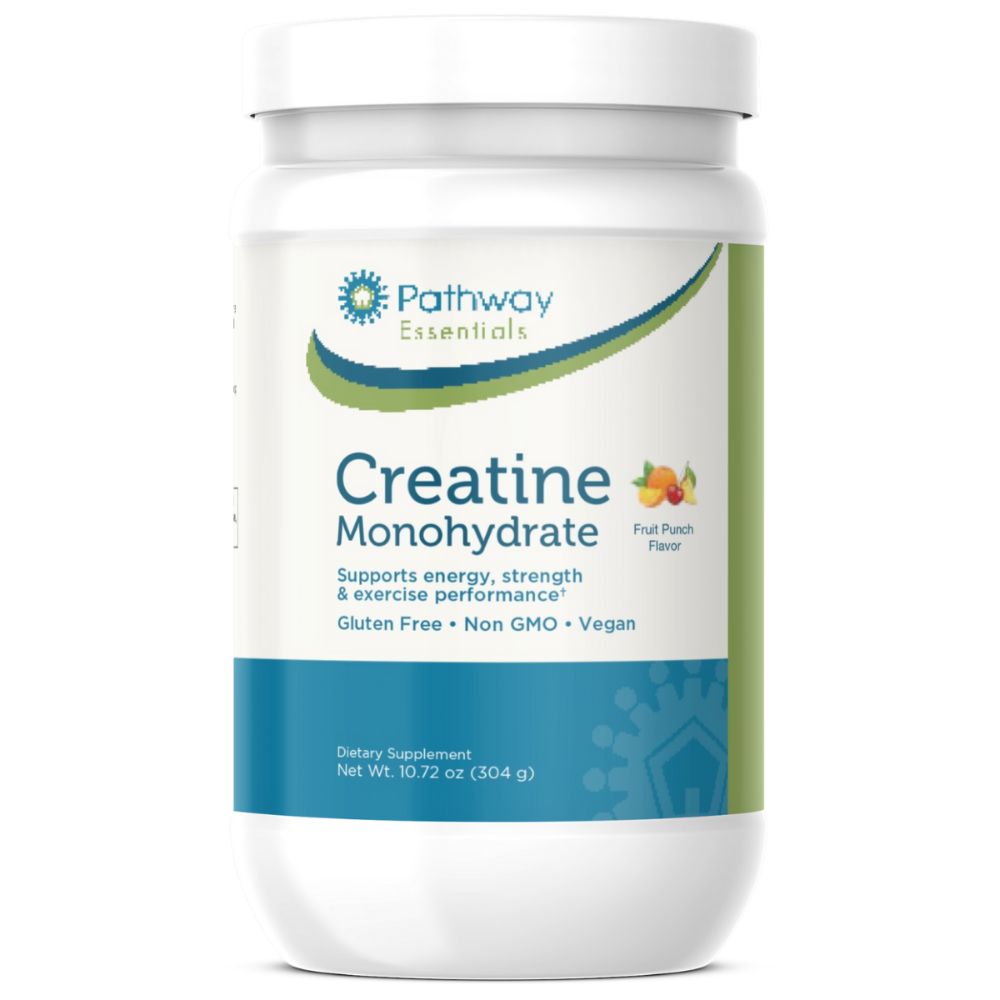
Monohidrato de creatina
No reviews
$28.39
$40.56
El monohidrato de creatina ya no es solo para atletas; ahora es un suplemento esencial para cualquiera que busque apoyar la fuerza, la resistencia y un envejecimiento saludable. Respaldado por una sólida investigación clínica, ayuda a llenar el vacío entre lo que produce el cuerpo y lo que se necesita para un rendimiento muscular y cognitivo óptimo.
La oportunidad de mercado para la creatina se está expandiendo rápidamente, impulsada tanto por sus beneficios bien establecidos en la nutrición deportiva como por su papel emergente en el envejecimiento saludable. Si bien el cuerpo produce pequeñas cantidades de creatina y parte se obtiene de alimentos como la carne roja y los mariscos, estas fuentes a menudo son insuficientes para alcanzar los niveles necesarios para un rendimiento muscular, recuperación y apoyo cardiovascular óptimos. El monohidrato de creatina suplementario llena este vacío de manera efectiva, con una sólida evidencia clínica que respalda su capacidad para mejorar la fuerza, la resistencia y la masa muscular. Lo que está impulsando una demanda aún mayor por parte de los consumidores es el creciente interés entre los adultos de mediana edad y mayores que están adoptando estilos de vida activos y buscan mantener la fuerza, la movilidad e incluso el rendimiento cognitivo a medida que envejecen. Este cambio ha creado una base de consumidores nueva y de rápido crecimiento, posicionando la creatina como un suplemento no solo para atletas, sino para cualquiera que busque bienestar y vitalidad a largo plazo.
Características:
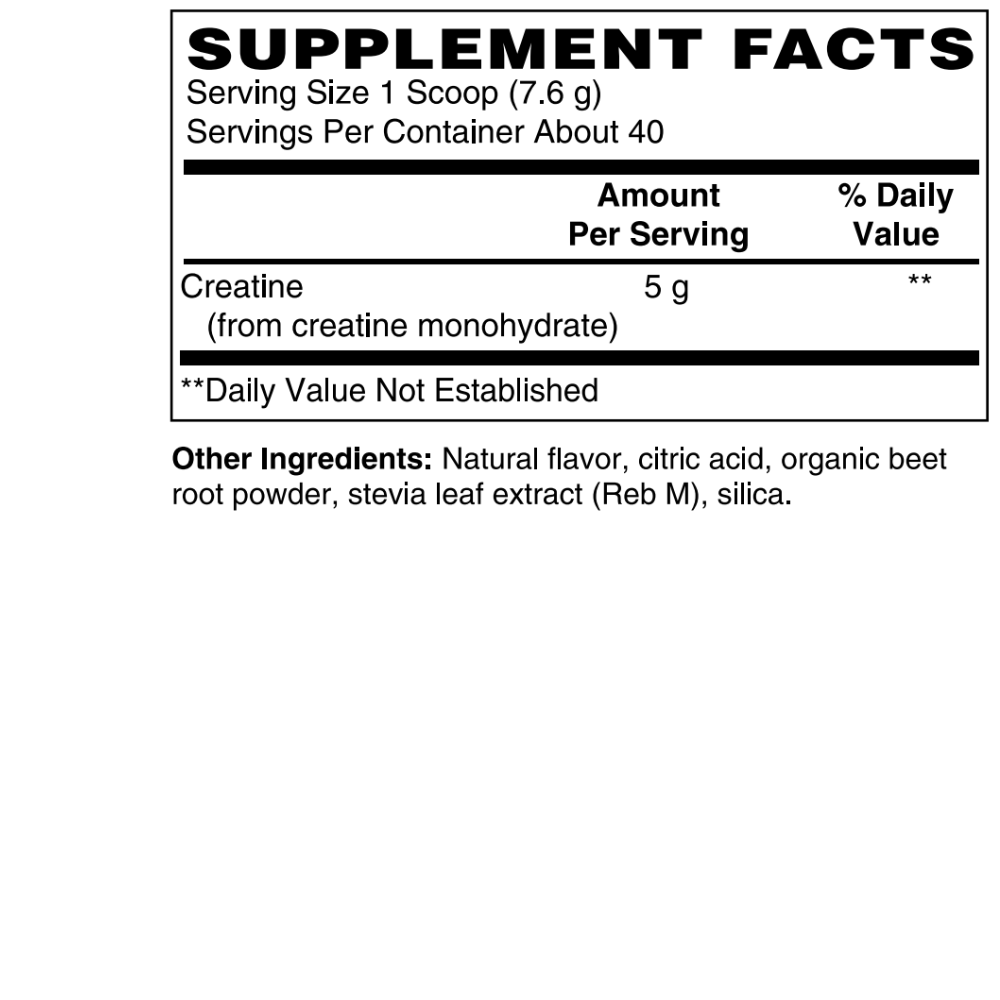
5 gramos de monohidrato de creatina pura de grado farmacéutico por porción (cucharadita)
Ponche de frutas con sabor natural
No contiene azúcar, sal, lácteos, levadura, trigo, gluten, huevos, cacahuetes, soja, frutos secos, pescado, mariscos, sésamo, conservantes, colorantes o sabores artificiales
Sin gluten, sin OMG y vegano
Beneficios:
Apoya la energía, la fuerza y el rendimiento físico.
El monohidrato de creatina sirve como fuente de grupos fosfato. Esto permite que la principal fuente de energía del cuerpo (ATP) se mantenga en niveles óptimos.
Los niveles óptimos de ATP, particularmente en el tejido muscular, ayudan a apoyar y mejorar el rendimiento y la resistencia muscular.
La investigación científica ha verificado que la creatina aumenta la fuerza muscular, la masa corporal magra y la energía muscular, al tiempo que acelera la recuperación de energía durante el ejercicio intenso.
Los estudios demuestran que el monohidrato de creatina puede ayudar a reducir la fatiga muscular al disminuir la acumulación de ácido láctico en el tejido muscular después de actividades, ejercicios, etc. que requieren breves estallidos de máxima energía.
La creatina regenera la energía ATP para aumentar el tiempo de trabajo muscular en la actividad anaeróbica, lo que ayuda a un entrenamiento más intenso que mejora aún más la fuerza y el crecimiento muscular al retrasar la fatiga muscular.
Uso sugerido:
Como suplemento dietético, los adultos toman una (1) medida en ocho (8) oz. de agua, cuatro (4) veces al día durante los primeros cinco (5) días (fase de carga).
Después de la fase de carga, tome una (1) o dos (2) veces al día, o según las indicaciones de un profesional de la salud.
Instrucciones de almacenamiento:
Almacenar en un lugar fresco y seco, lejos de la luz directa.
Advertencia:
MANTENER FUERA DEL ALCANCE DE LOS NIÑOS.
Categories
Categories
Humanized Health - NEW!
Learn about personalized health from top experts! Check out our fascinating new shows every week, available as videos, podcasts and transcripts.:
Our Bloggers
-
 Paula Gallagher
Paula is a highly qualified and experienced nutrition counselor on the staff at Village Green.
read more.. -
 Margo Gladding
Margo's impressive knowledge base is the result of a unique blend of educational and professional experience.
read more.. -
 Dr. Neal Barnard
Dr. Barnard leads programs advocating for preventive medicine, good nutrition, and higher ethical standards in research.
read more.. -
 Dr. Joseph Pizzorno
Dr. Joseph Pizzorno, ND is a pioneer of integrative medicine and a leading authority on science-based natural medicine.
read more.. -
 Debi Silber
Debi is a registered dietitian with a master’s degree in nutrition, a personal trainer, and whole health coach.
read more..
SEE ALL OF OUR BLOGGERS
Invalid password
Enter


Learning Resources
Consultas
Farmacia/Preparación de medicamentos
Salud Humanizada
Blog de Village Green
General Information
Contáctenos
Sobre nosotros
Política de privacidad
Oportunidades de Empleo
Programa de afiliados
Stay Connected
Village Green Apothecary
5415 W Cedar Ln
Bethesda, Maryland, 20814
(301) 530-0800
Toll Free: (800) 869-9159
The information provided on this site is not intended to be a substitute for advice or treatment from a qualified physician, nor is it intended to diagnose or treat a health problem or disease. Consult your physician prior to starting any new health program or if you any questions regarding a medical condition.
© 2025 Village Green Apothecary - All Rights Reserved.
